What to See in Qufu China Top Attractions Travel Guide
How to Get to Qufu China and Get Around
If you’re wondering how to actually reach Qufu and move around once you arrive, here’s the simple version that works in real life, not just on paper.
High-Speed Trains to Qufu (Beijing, Shanghai, Jinan, Qingdao)
Your fastest and easiest way in is by high-speed rail to Qufu East Railway Station (曲阜东站).
Typical times (G/D trains):
- Beijing → Qufu East: ~2.5–3 hours
- Shanghai → Qufu East: ~3–3.5 hours
- Jinan → Qufu East: ~30–40 minutes
- Qingdao → Qufu East: ~2.5–3 hours
Tips:
- Book on 12306 app (English version available) or through an agent if apps stress you out.
- Aim to arrive before 7–8 pm if you don’t speak Chinese; it’s easier for taxis and buses.
Qufu East Station vs Old Qufu Train Station
There are two main stations, and they’re very different:
- Qufu East (曲阜东站)
- On the high-speed rail line
- ~10–12 miles (16–20 km) from the old town
- Clean, modern, where most travelers arrive
- Qufu Station (曲阜站 – old station)
- On the slower “normal” train lines
- Closer to the old town (short taxi ride)
- Only useful if you’re already on a slow train route
For most trips, always choose Qufu East when you book.
Getting from Qufu East to the Old Town
From Qufu East Station to the Confucius Temple / old town area takes about 30–40 minutes.
You’ve got a few options:
- Taxi (easiest)
- Follow station signs to the official taxi queue
- Ride: ~30–40 minutes
- Cost: usually ¥40–60
- Show this: “去孔庙南门” (To Confucius Temple South Gate)
- Didi (Chinese Uber)
- Works well if you have data + translation
- Choose “Qufu Confucius Temple” or your hotel pin
- Prices similar to taxi, sometimes a bit cheaper
- Public bus
- Cheapest, but slower and with Chinese-only signs
- Good if you’re on a tight budget and not in a rush
- Ask staff: “去孔庙的公交车?” (Which bus to Confucius Temple?)
If you arrive very late, just plan on taxi or Didi — buses may already be done for the day.
Getting Around Qufu: Walk, Taxi, Didi, Bus
Inside Qufu, distances are small around the main Qufu attractions (Temple, Mansion, Kong Family Cemetery).
- Walking
- The old town / city walls area is very walkable
- Most UNESCO Confucius sites are within 10–20 minutes on foot
- Taxi
- Good for rides to Kong Lin (Kong Family Cemetery), the Confucius Museum, or bus stations
- Short rides usually ¥10–20 inside the city
- Didi
- Perfect if you’re used to ride-hailing apps
- Helpful for places like Nishan Sacredland and Six Arts City
- Local buses
- Super cheap (about ¥1–2 per ride)
- Useful if you’re okay with basic Chinese or a translation app
- Ask hotel staff to write down the bus number + stop name for you
Short Rides to Nearby Qufu Attractions
Approximate taxi/Didi times from the old town:
- Kong Family Cemetery (Kong Lin): 10–15 minutes
- Confucius Museum: 10–15 minutes
- Six Arts City: 15–25 minutes depending on traffic
- Nishan Sacredland / Confucius Cave area: 30–40 minutes (budget for a round trip)
Always confirm if the driver will wait for you at more remote spots like Nishan, or plan on calling Didi for your return.
Late Arrivals, Language Barriers, and Tickets
A few things that save headaches:
- Late trains
- Screenshots your hotel name in Chinese
- Use the station ATM if you need cash for taxis
- Expect fewer English speakers at night — rely on translation apps
- Language tips
- Have key phrases ready on your phone:
- “去孔庙南门” – Go to Confucius Temple South Gate
- “去曲阜古城” – Go to Qufu old town
- Point to your destination on Baidu Maps / Google Maps (offline)
- Have key phrases ready on your phone:
- Train tickets
- With a passport, most high-speed trains are e-ticket based; you just scan your passport at the gate
- Buy your return ticket in advance if you’re traveling on weekends, holidays, or during the Qufu Confucius Festival (September)
If you handle trains and rides this way, getting to Qufu China and moving around the city is straightforward, even on your first visit.
Where to Stay in Qufu China – Best Areas and Hotels
When you’re planning what to see in Qufu, where you stay will shape how easy your trip feels. Qufu is compact, but choosing between the ancient city and Qufu East Station area makes a big difference in vibe and convenience.
Staying Inside Qufu Ancient City Walls
If your main goal is Confucius sites, stay inside or right next to the old town walls. This is where most Qufu attractions are:
- Walkable to the Big Three: Temple of Confucius, Confucius Mansion, and Kong Family Cemetery are all close by.
- Best for first-time visitors & photographers: Lantern-lit streets, old gates, and night views around the Drum Tower.
- Quiet but atmospheric: Evenings are calm, but you’re steps from snacks, street food, and small shops.
If you want more detail on neighborhoods and specific stays, I break down the best Qufu hotels near Confucius Temple on my dedicated guide at Qufu Travel Guide.
Staying Near Qufu East Railway Station
Qufu East (high-speed rail) is about 8–10 miles (13–16 km) from the old town. This area is mainly about convenience, not charm:
- Good for late arrivals / early trains to Beijing, Shanghai, Jinan, or Qingdao.
- Simple business hotels, a few chain brands, plenty of taxis.
- Commute to the old town: 20–30 minutes by taxi or Didi depending on traffic.
If your train is before 8:00 a.m. or after 9:00 p.m., I’d stay one night near Qufu East Station and the rest inside the ancient city.
Best Luxury Hotels in Qufu (Shangri-La and More)
For U.S. travelers used to international standards, Qufu has a couple of standouts:
- Shangri-La Hotel, Qufu
- Location: Just outside the old city, walkable or a short taxi ride to the Confucius Temple.
- Why I like it: Large rooms, Western-friendly breakfast, good English from staff, strong air-con and heating (important in Shandong summers/winters).
- Other high-end options
- A few newer Chinese-brand “cultural resort” style hotels are opening around the city and near Nishan, but Shangri-La is still the most reliable full-service choice in town.
If you want comfort similar to a mid-level U.S. city hotel, pick Shangri-La and then simply walk or taxi into the old city for sightseeing.
Best Mid-Range Hotels Close to Qufu Attractions
In the $40–$90 per night range, you’ll find a lot of good value near the Confucius Temple:
- Modern Chinese chains (Jinjiang, Atour, etc.) with:
- Clean rooms, reliable Wi‑Fi, decent beds
- Basic or Chinese-style breakfast
- Best for:
- Travelers who prioritize location + value over “wow” factor
- People who want to walk to the main Qufu attractions and not rely on taxis all day
Look for hotels with “Confucius Temple / Kongmiao” or “Gulou / Drum Tower” in the name to be sure you’re in the right area.
Boutique Courtyard Guesthouses in Qufu Old Town
If you want that traditional courtyard vibe while staying close to everything:
- Expect:
- Classic gray-brick courtyards, wooden doors, red lanterns
- Smaller room count, more character, sometimes themed around Confucian culture
- Pros:
- Super atmospheric, great for photos and a “this feels like old China” stay
- Usually just a short walk from the Temple of Confucius and city walls
- Cons:
- English levels can be hit or miss
- Heating/AC, soundproofing, and beds may feel more “Chinese-style” (firmer) than U.S. chains
If you’re okay using translation apps and want a more local feel, these boutique courtyard hotels are the most fun way to stay in Qufu.
Where to Stay for Early Trains or Late-Night Arrivals
Base your choice on your train schedule:
- Stay near Qufu East Station if:
- You arrive after 9:00–10:00 p.m.
- You depart before ~8:00 a.m.
- You don’t want to deal with a 30-minute taxi ride in the dark or in winter weather.
- Stay in the old town if:
- Your trains are between ~9:00 a.m. and 8:00 p.m.
- You care more about night walks, food, and easy sightseeing.
You can always do one night by the station + one night in the ancient city if your schedule is tight.
How Many Nights to Stay in Qufu
How long you stay depends on how deep you want to go into Confucian culture:
- 1 night (fast trip)
- Enough for the Big Three (Temple, Mansion, Cemetery) and a short evening walk in the old town.
- Works if you’re doing a quick Qufu stop between Jinan and Shanghai/Beijing.
- 2 nights (what I recommend for most U.S. travelers)
- Day 1: Big Three Confucius sites + old town walk
- Day 2: Confucius Museum, Six Arts City, or Nishan Sacredland
- Gives you buffer for crowds, weather, and photo time.
- 3 nights (Confucian deep dive)
- Add Nishan Sacredland, Zoucheng (Mencius Temple), or a slow-food day focused on local dishes like Qufu smoked tofu and Confucian banquets.
If you’re building a full Qufu travel guide itinerary around your hotel choice, start by deciding nights first, then pick an old-town stay and add a station hotel only if your train times force it.
Qufu’s Big Three Must-See Confucius Sites
When people ask what to see in Qufu China, I always start with the “Big Three”: the Temple of Confucius, Confucius Mansion, and the Kong Family Cemetery. These UNESCO-listed sites sit close together and give you a full picture of Confucian culture in just one walkable area.
Temple of Confucius (Kong Miao)
This is the core Qufu attraction and one of the most important Confucius temples in China. It was built on the site of Confucius’s former home and expanded by emperors for over 2,000 years, which is why it feels almost like a “mini Forbidden City.”
- What to look for
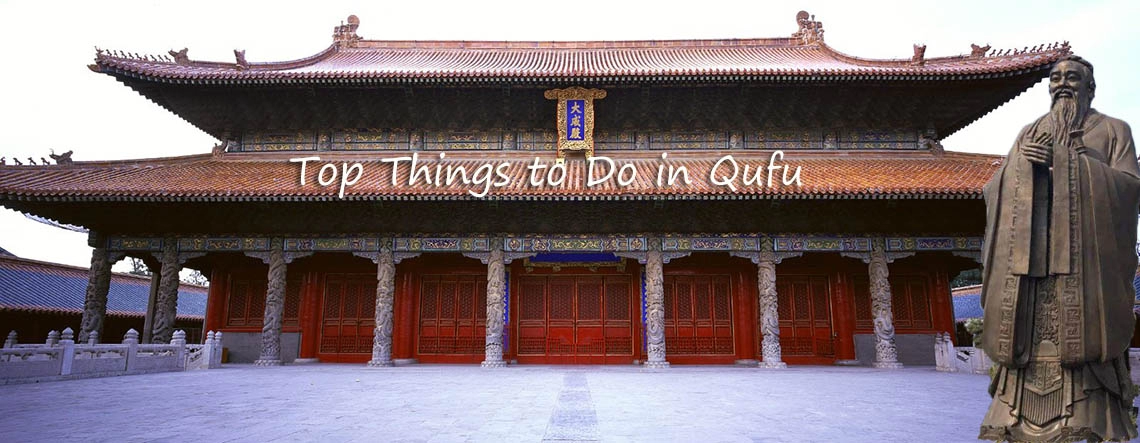
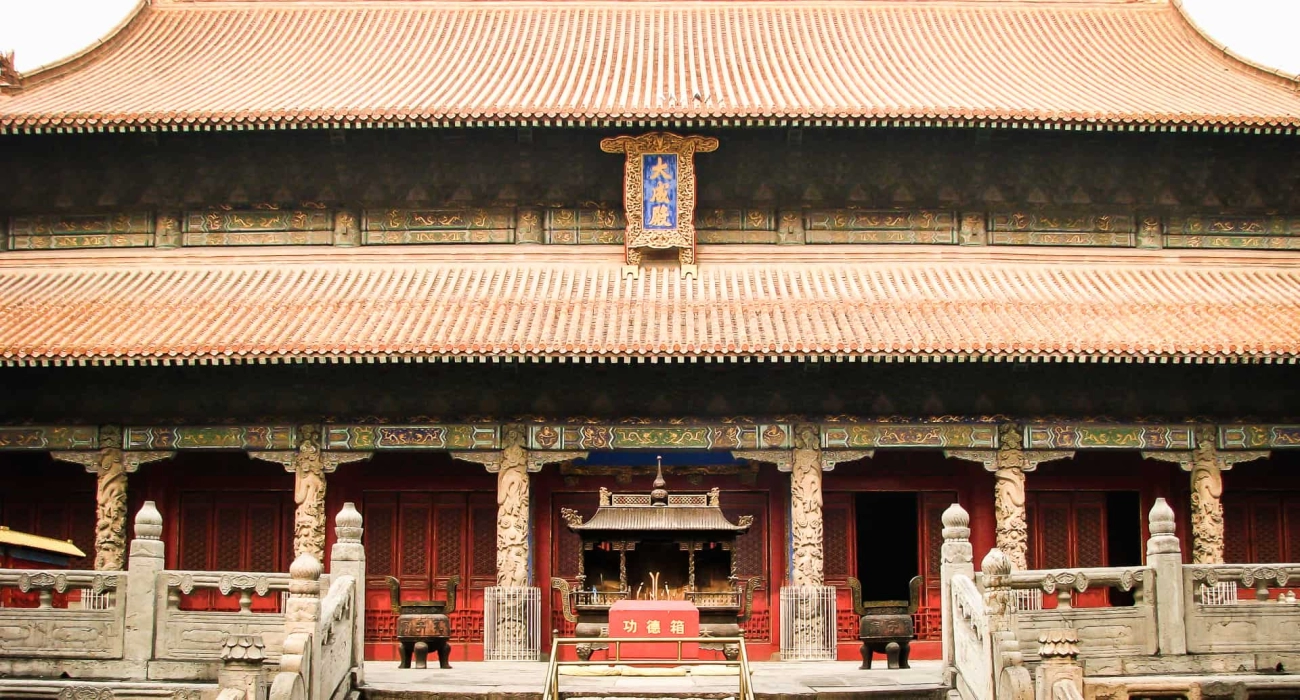
- Main axis halls like Lingxing Gate, Dacheng Hall (Hall of Great Achievement), and the Apricot Platform where Confucius supposedly taught.
- Hundreds of ancient cypress and cedar trees, some over 1,000 years old, creating great shade and atmosphere.
- Stone steles with imperial calligraphy lining the side courtyards.
- Best photo spots
- The front of Dacheng Hall with its yellow glazed roof and tall cypress trees.
- Side courtyards with low crowds where you can frame doorways and red walls.
- Early morning shots by the Lingxing Gate before tour groups arrive.
For a deeper dive into the history and layout, I’ve broken it down step by step in my detailed Confucius Temple guide for Qufu.
- Ceremonies and performances
- Traditional Sacrifice to Confucius ritual-style shows usually run in the morning (often around 9–10 am; times can vary by season and holidays).
- Expect drum and bell performances, music, and dancers in ceremonial robes.
- Get there15–20 minutes early if you want a front-row view and better photos.
Confucius Mansion (Kong Fu)
Right next to the temple, the Confucius Mansion was the home and office of Confucius’s descendants, the powerful Duke Yansheng family. Walking through it is like entering the private side of Confucian life: politics in the front, family courtyard life in the back.
- Key areas inside
- Front halls and offices where the Kong family handled official duties.
- Residential courtyards with living quarters, reception rooms, and study spaces.
- Small gardens, rockeries, and side lanes that feel surprisingly quiet if you go early.
- How to walk it without backtracking
- Follow the front-to-back one-way flow: enter from the front gate, move straight through the official halls, then into living quarters and garden areas.
- Try not to cut across side courtyards too early or you’ll end up circling back on yourself.
- Give yourself at least 45–60 minutes if you actually like reading signs and checking details.
If you want a focused walkthrough and background on the family, I map out the main route in my dedicated Confucius Mansion guide for Qufu visitors.
Cemetery of Confucius (Kong Lin)
The Kong Family Cemetery is a huge, walled forest where Confucius and tens of thousands of his descendants are buried. Compared with the busy temple and mansion, it’s quiet, green, and more like a historical park.
- Layout and what makes it unique
- Long tree-lined paths leading to Confucius’s tomb.
- Separate areas and mounds for key descendants, ministers, and family members.
- Ancient steles, stone gateways, and simple tomb markers spread through the woods.
- Famous tombs and stele
- Confucius’s tomb itself (often with offerings and incense in front).
- Tombs of notable descendants like Kong Ji (Zisi).
- Tall stone tablets with detailed inscriptions on the Kong lineage.
- Best walking routes and timing
- If you’re short on time: take the direct main path to Confucius’s tomb, then loop back along a side trail for a quieter walk.
- For a peaceful visit: aim for early morning or late afternoon to catch softer light through the trees and avoid the hottest part of the day.
- Sunrise and sunset both work well for photos and cooler temperatures, especially in spring and fall.
If you’re planning out a Qufu itinerary, these three spots should anchor your day. Once you’ve walked the temple, mansion, and cemetery, you’ll have hit the heart of Shandong’s Confucian heritage and the main UNESCO sites in Qufu.
More Things To See And Do In Qufu, China
Once you’ve covered the “Big Three,” there’s still a lot to see in Qufu. If you want to go deeper into Confucian culture instead of just checking off landmarks, this is where Qufu really gets interesting.
Six Arts City: Hands-On Confucian Experiences
Six Arts City is a modern cultural park built around Confucius’s “six arts” (rites, music, archery, charioteering, calligraphy, mathematics). It’s touristy but genuinely fun, especially if you’re traveling from the US with kids or teens.
Best things to do in Six Arts City:
- Ritual and music shows – Live performances recreating court ceremonies, with drums, bells, and dancers in hanfu.
- Archery and etiquette workshops – Short, guided sessions where you can try archery or learn basic Confucian礼仪 (ritual etiquette).
- Hanfu dress-up and photos – Rent traditional clothing for family photos in courtyard-style sets.
- Kid-friendly crafts – Paper fans, simple calligraphy, or seal carving, usually with staff who can help using translation apps.
Plan about 2–3 hours. Go in the late afternoon and stay through sunset so you catch both daytime activities and evening lights.
Nishan Sacredland & The Giant Confucius Statue
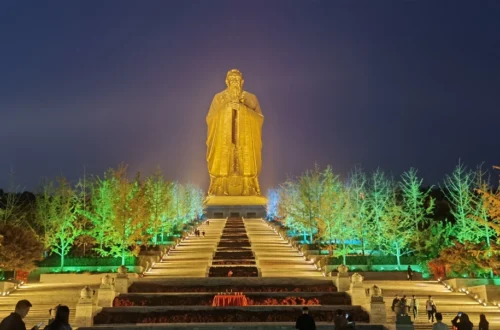
Nishan Sacredland sits near Mount Nishan, traditionally linked to Confucius’s birthplace. It’s more of a cultural theme complex than an old temple, but it’s one of the most visually impressive Qufu attractions.
What to see at Nishan Sacredland:
- Giant Confucius statue – A massive hilltop statue overlooking the complex; good for wide-angle shots and drone-style photos (where allowed).
- Confucian-themed light shows – Night projections on buildings and the statue with music telling Confucius’s life story.
- Indoor cultural halls – Multimedia exhibits about Confucian ideas, often with English subtitles.
Night visit tips:
- Aim to arrive before sunset to walk the grounds in daylight, then stay for the evening light show.
- Nights can be windy and cooler than Qufu city, so bring a light jacket.
- Crowds spike on weekends and holidays; weekday evenings feel calmer and easier to photograph.
Getting From Qufu City Center To Nishan Sacredland
From the old town or Confucius Temple area, you’ve got a few options:
- Taxi or Didi: The easiest for US travelers. It’s usually a 30–40 minute ride; show the driver “尼山圣境”.
- Hotel shuttles: Some higher-end Qufu hotels or local agencies run evening tours that include round-trip transport and tickets.
- Tour packages: If you don’t want to deal with apps or Mandarin, ask your hotel to book a simple “Nishan night tour” that covers everything.
Duke Zhou Temple: A Quick Historical Stop
The Duke Zhou Temple (周公庙) honors the Duke of Zhou, a key figure in early Chinese political philosophy and a major influence on Confucius.
- Why stop here: Fewer crowds, quiet courtyards, and a clean layout that’s easy to see in 30–45 minutes.
- What to look for: Main central hall, old stone steles, and symmetry of the courtyards that echo early ritual architecture.
- Combine it with Yan Hui Temple or a walk along the ancient city wall to fill a half day without rushing.
Yan Hui Temple: Confucius’s Favorite Disciple
Yan Hui was Confucius’s beloved disciple, known for his humility and character. His temple (颜庙) is a smaller, more peaceful counterpart to the main Confucius Temple.
- Why it matters: It shows how Confucian culture valued students and moral role models, not just the “master.”
- What to expect: A compact complex with ancient trees, a main shrine hall, and fewer tour groups.
- Time needed: Around 30–60 minutes; good for travelers who like quieter, reflective spaces.
Confucius Museum: Must-See Exhibits & Timing
The Confucius Museum is modern, well-designed, and a perfect add-on if you want more context than the historic sites alone can give.
Highlights:
- Kong family artifacts – Clothing, books, ritual items from the descendants of Confucius.
- Interactive galleries – Maps, timelines, and touchscreens explaining how Confucianism spread across East Asia.
- Architecture – Minimalist design, big glass atriums, and strong photo angles.
How much time you need:
- Fast visit: 1.5 hours to hit the main exhibition halls.
- In-depth: 2–3 hours if you like reading panels and using audio/translation apps.
If you want a broader overview of the city’s culture before you go deep on sites, the Confucius Museum pairs well with a structured resource like this detailed Qufu Confucius heritage guide.
Ancient City Wall, Gates & Drum Tower At Night
Qufu’s old town is compact and easy to walk, especially at night.
- Ancient city wall: Not as huge as Xi’an, but certain restored sections and gates are lit up nicely.
- Drum Tower: One of the best night photo spots. From the tower, you get views over lantern-lit streets and rooflines.
- When to go: Around 7–9 pm, when shops are open, but big tour groups have faded.
Old Town Walk: Lanterns & Street Life
If you like wandering more than ticking off museums, this is where Qufu shines.
Best walking zone:
- Streets just outside the Confucius Temple area and around the Ming-era style lanes.
- Red lanterns, snack stands, souvenir shops, and small guesthouses all packed into a few main streets.
What to look for:
- Kids playing in alleys, older locals chatting on stools, vendors grilling skewers.
- Small courtyards and side alleys often make better photos than the main drag.
Mencius Temple In Zoucheng: Easy Half-Day Add-On
Zoucheng, a small city about 20–30 minutes by train or 45–60 minutes by car from Qufu, is the hometown of Mencius (Mengzi).
- Mencius Temple and Mansion: Similar Confucian layout to Qufu’s temple and mansion, but with far fewer visitors.
- Why go: If you’re already in Shandong for Confucius, it’s a natural next step to see where Mencius, another major Confucian thinker, lived and was honored.
- You can easily fit this into a half-day trip from Qufu if you like quieter, off-the-path sites.
Shaohao Tomb & Other Lesser-Known Sites
If you prefer low-key historic spots over big-ticket attractions, Qufu has a few:
- Shaohao Tomb (少昊陵) – A legendary tombsite tied to one of the mythic Five Emperors; quiet forested surroundings, simple but atmospheric.
- Smaller temples and shrines – Scattered around the outskirts, often with crumbling walls and older trees that photograph well.
- These are optional, best for travelers who have already seen the main sites and still have time and energy.
Confucius Cave & Nishan Birthplace Myths
Near Mount Nishan you’ll find Confucius Cave, linked by legend to Confucius’s birth.
- Reality check: It’s more about the story and symbolism than dramatic scenery.
- What to expect: Small cave shrine, simple religious decorations, and local visitors paying respects.
- Worth it if you’re already at Nishan Sacredland and want to connect myth, landscape, and Confucian heritage in one loop.
Calligraphy Classes & Culture Workshops In Qufu
If you’re coming from the US and want something you can do, not just see, Qufu has a growing number of short cultural classes:
- Chinese calligraphy – Learn to write characters like “仁” (ren – benevolence) or “礼” (li – ritual) with brush and ink.
- Tea ceremony – Basic introductions to Chinese tea culture in traditional-style tea houses.
- Ritual & etiquette workshops – Short sessions in hanfu teaching bowing, seating, and greeting rituals.
Ask your hotel or a local agency; most workshops are 1–2 hours and can handle English speakers using translation apps.
Confucian Cuisine & Qufu Local Food
Qufu leans into “Confucian cuisine” – banquet-style dishes built around ritual, seasonality, and presentation.
What to try:
- Confucian banquet – Multi-course set menus served in traditional restaurants near the Confucius Temple; ideal if you’re traveling as a pair or family.
- Qufu smoked tofu (曲阜熏豆腐) – Local specialty; smoky, chewy, usually stir-fried or served cold.
- Shandong-style dishes – Braised pork, fried shrimp, and big, bold flavors typical of Shandong cuisine.
For a deeper breakdown of food, etiquette, and how it all ties back to Confucius, check a full Qufu travel guide focused on 2026 visitors.
Sacrifice To Confucius Performance: Schedule & Tips
Qufu stages ceremonial performances that recreate the “Sacrifice to Confucius” rites.
- When: Most frequently around peak seasons (especially late September near Confucius’s birthday), with smaller versions at set times in high season.
- Where: Typically inside or near the Temple of Confucius or related performance spaces.
- Tips:
- Get there early to secure a clear view.
- Check schedules via your hotel, local tour desk, or attraction ticket office the day before.
- Expect big tour groups; this is one case where a guided tour can help you understand what you’re watching.
Ming-Era Streets: Snacks, Souvenirs & People-Watching
End your day with a simple walk through the Ming-style old streets near the Confucius Temple.
- Snacks: Grilled skewers, sugar-coated hawthorn, steamed buns, and local pastries.
- Souvenirs: Calligraphy brushes, ink stones, Confucius-themed bookmarks, and simple scrolls.
- People-watching: Sit with a tea or snack, and watch students, families, and tour groups filter through after dark.
It’s an easy, low-effort way to end a day heavy on history—just strolling, eating, and soaking in Qufu’s small-city night vibe.
Suggested 1-Day Qufu Itinerary: What to See in Qufu China in One Day
If you’ve only got one day in Qufu, you can still hit the big Confucius sights, eat well, and squeeze in some night views. Here’s exactly how I’d do it.
Morning: Temple of Confucius + Confucius Mansion
8:00–11:30 a.m. – Temple of Confucius (Kong Miao)
Head straight to the Temple of Confucius, Qufu’s top UNESCO site. Aim to arrive right at opening to dodge tour groups and heat.
Best entry/exit to save time on the Big Three:
- Buy the combined ticket (Temple + Mansion + Kong Family Cemetery) at the main south gate ticket office.
- Enter through the south gate of the Temple of Confucius.
- Follow the central axis: Lingxing Gate → Dacheng Hall → Apricot Platform area → stele forest.
- Exit on the east side, following signs for the Confucius Mansion (Kong Fu) so you don’t backtrack.
Inside the temple, don’t miss:
- The ancient cypress trees and stone steles along the main courtyards
- The Dacheng Hall (main hall) – the heart of Confucian worship
- Side courtyards for quieter, better photo angles away from big groups
If you want a deeper background before you go, this detailed Confucius Temple guide walks through the main halls and symbolism.
9:45–11:30 a.m. – Confucius Mansion (Kong Fu)
From the temple’s east exit, walk directly into the Confucius Mansion (it’s attached, just follow the signs).
To avoid wandering in circles:
- Follow the main route front → back: official halls → living quarters → back gardens.
- Move roughly clockwise once you’re in the residential area, so you naturally reach the gardens and then the exit.
- Focus on:
- The reception halls that show how the Kong family handled official business
- The residential courtyards with old furniture and plaques
- The rear garden for quiet paths and shaded photos
Plan 1–1.5 hours inside the Mansion if you’re on a tight one-day Qufu itinerary.
Lunch Break Near the Main Qufu Attractions
11:30 a.m.–1:00 p.m. – Food near Qufu old town
Stay close to the Qufu old town / Temple area:
- Look for restaurants serving Confucian cuisine, Qufu smoked tofu, and simple Shandong dishes.
- If you want it quick:
- Noodle shops
- Dumpling places
- Small local eateries just outside the south or east gate area
Eat early if you can – big Chinese tour groups crowd the restaurants right at noon.
Afternoon: Kong Family Cemetery (Kong Lin) and Quiet Walks
1:00–4:00 p.m. – Cemetery of Confucius (Kong Lin)
Grab a short taxi or Didi (or walk if you like) to the Kong Family Cemetery, where Confucius and his descendants are buried.
How to use your time well:
- Enter through the main south gate and stick to the central path at first to reach:
- The tomb of Confucius
- Key stele and main memorial spots
- After seeing the main tomb:
- Peel off onto side forest paths for quiet, shaded walks
- Look for lesser-visited family tomb areas, which are usually peaceful even on busy days
If you like photos, this is where you get:
- Tree-lined paths, simple stone bridges, and mossy walls
- Soft light in late afternoon, making it great for portraits and detail shots
You can spend 2–3 hours here without rushing.
Evening: City Wall, Drum Tower, and Old Town Walk
4:30–7:30 p.m. – Qufu city wall and Drum Tower area
Head back toward the ancient city wall and Drum Tower:
- Take a walk around the old streets inside the walls:
- Look for lanterns, snack stalls, and souvenir shops on Ming-era style streets
- Good for street photography and casual people-watching
- If accessible, go up near the Drum Tower area around sunset:
- Night lights on the walls and towers make for good skyline shots
- Easy, relaxed way to end your one-day Qufu itinerary
Have dinner nearby – stick with places that are busy with locals, not just tour groups.
How to Adjust This 1-Day Qufu Itinerary for Bad Weather or Delays
If it’s raining, very hot, or your train is delayed, tweak the plan like this:
- Heat / mid-day sun
- Do Temple + Mansion early, then Cemetery later afternoon when it’s cooler.
- Take longer breaks in shaded courtyards and gardens.
- Rainy day
- Spend extra time in covered halls inside the Temple and Mansion.
- Shorten the Cemetery visit; focus on the main tomb and nearby areas only.
- Late arrival in Qufu
- Daytime: Prioritize Temple of Confucius + Mansion (they’re connected and efficient).
- If time remains, do a short Cemetery visit or just the old town + Drum Tower in the evening.
- Crowded national holidays
- Get to the Temple right at opening, then Mansion.
- Push the Cemetery to mid/late afternoon, when many tour groups have already left.
If you’re flexible with dates, this Qufu weather and best time to visit guide is useful for picking the right season so a one-day trip doesn’t get wrecked by weather.
Suggested 2-Day Qufu Itinerary (What to See in Qufu China in 2 Days)
If you’ve got 2 days in Qufu, you can see the classics without rushing and still have time for food, photos, and a bit of night life in the old town.
Day 1: Big Three Confucius Sites
Morning (8:00–12:30)
Focus on the UNESCO “Big Three” Qufu attractions, all walkable in the old town:
- Temple of Confucius (孔庙) – Enter right at opening to beat the tour groups.
- Spend ~1.5–2 hours walking the main axis, courtyards, and cypress groves.
- Hit top photo spots early while light is softer and crowds are thinner.
- Confucius Mansion (孔府) – Exit the Temple and walk straight into the Mansion area.
- Plan 1–1.5 hours to see family halls, living quarters, and back gardens.
- Follow the one-way flow; don’t backtrack or you’ll burn time and energy.
Lunch (12:30–14:00)
Stay near the old town walls so you don’t waste walking time:
- Try Confucian cuisine tasting menus or simple local dishes like Qufu smoked tofu.
- Use this mid-day slot to hide from the worst heat (especially June–August).
Afternoon (14:00–17:00)
- Kong Family Cemetery (孔林) – Take a short taxi/Didi ride.
- Allow ~2–3 hours for shaded walking paths, tombs, and stone steles.
- Stick to quieter inner paths for peaceful photos and less foot traffic.
Evening (17:30–21:00)
- Walk the old town streets, city wall, and Drum Tower area.
- Night shots of lanterns and gates are usually best just after sunset.
Day 2: Nishan Sacredland, Six Arts City, or Confucius Museum
Pick one main focus depending on your style:
Option A: Nishan Sacredland + Night Show
Best if you want big visuals and Confucius “birthplace” vibes.
- Morning/Lunch – Slow start in Qufu old town or sleep in.
- Afternoon – Head to Nishan Sacredland for the giant Confucius statue, culture zones, and lake views.
- Evening – Stay for the light and sound shows and cultural performances, then return to Qufu.
- This works especially well in shoulder and warm seasons; check show times and weather.
Option B: Six Arts City + Confucius Museum
Best if you like interactive culture and museums.
- Morning: Six Arts City (六艺城)
- Hands-on Confucian culture, archery, chariot rides style shows, and workshops.
- Great if you’re traveling with kids or want more than just “look and leave” sightseeing.
Practical Qufu Travel Tips You Actually Need
Tickets for the Temple, Mansion, and Cemetery (Kong Lin)
- There’s a combined ticket that covers the Temple of Confucius, Confucius Mansion, and Kong Family Cemetery (Kong Lin).
- In 2026, expect around ¥140–¥160 for the combo in peak season and a bit less off‑season (students, kids, seniors usually get 50% or free with valid ID).
- Buy at any of the three main entrances or on official Chinese ticket apps (Alipay/WeChat mini‑programs).
- Tickets use real‑name + ID/passport. Keep your passport handy at the gate and any internal ticket checks.
- You typically enter each site once. Don’t exit and re‑enter unless staff clearly says it’s allowed.
2026 Opening Hours and Best Times to Visit
- Standard hours (check locally for seasonal tweaks):
- Temple & Mansion: ~8:00–17:00
- Kong Family Cemetery: ~7:00–18:00
- Best time of day:
- Temple of Confucius: Be there at opening (around 8:00) to dodge tour groups and get clean photos.
- Confucius Mansion: Late morning (10:00–11:30) or after 15:00 is smoother.
- Kong Family Cemetery: Late afternoon for long shadows, quiet paths, and softer light.
- Avoid the 11:00–14:00 peak for the Temple and Mansion, especially on weekends and Chinese holidays.
For current hours and a simple layout overview, I keep the latest info updated in my Qufu travel guide and map breakdown.
Dress Code and Temple Etiquette
You don’t need to dress up, but be respectful:
- Do:
- Wear covered shoulders and reasonably knee‑length bottoms if possible.
- Speak quietly inside halls and courtyards.
- Walk around people who are praying, not through their line of sight.
- Don’t:
- Touch ancient steles, carvings, or trees. Many are thousands of years old.
- Climb on walls, foundations, or old stone animals for pictures.
- Smoke inside temple and cemetery areas.
Photography Rules in Qufu Attractions
- Outdoor courtyards, gates, trees, and paths: photos and video are fine.
- Indoor halls and museum‑style rooms:
- Look for “No Photos” or “No Flash” signs. Many key rooms in the Mansion and some halls in the Temple restrict flash.
- Where flash is banned, turn off your flash or use night mode.
- Ceremonies & performances:
- Photos usually allowed, but don’t block performers or priests, and keep it discreet.
If in doubt, ask a guard or staff member—point to your camera and say “Keyi ma?” (Can I?).
Where to Eat Near Confucius Temple and Qufu Old Town
Within a 5–10 minute walk of the Temple gate, you’ll find:
- Local Shandong restaurants with big menus—look for dishes with 孔府菜 (Confucian cuisine).
- Noodle and dumpling shops for a fast, cheap lunch between sites.
- A few modern cafés around the old town if you need coffee, AC, and Wi‑Fi.
I’ve collected specific restaurant names, typical prices, and dishes to order in my Qufu food and restaurant guide so you can decide quickly on the ground.
Confucian Banquet vs Budget-Friendly Spots
- Confucian banquet restaurants (孔府菜):
- Higher‑end, sit‑down experience with dishes inspired by recipes served to the Kong family.
- Expect set menus around ¥150–¥400 per person depending on how fancy you go.
- Good for groups, families, or one “special” meal in Qufu.
- Budget‑friendly options:
- Local noodle shops, jianbing (savory crepes), dumplings: usually ¥15–¥40 per person.
- Perfect between sightseeing when you just want something fast and safe.
Qufu Street Food: What to Try (and What to Skip)
Worth trying:
- Qufu smoked tofu (曲阜熏豆腐): signature snack, slightly smoky and chewy.
- Shandong pancakes (煎饼): rolled with veggies, egg, and sauces.
- Steamed buns (包子) & dumplings (饺子): safe, filling, and everywhere.
Be cautious or skip if you have a sensitive stomach:
- Cold meats that sit out at room temperature.
- Anything cooked once and reheated multiple times in the same oil.
- Street desserts with unsealed ice or shaved ice from questionable machines.
Money-Saving Tips in Qufu
- Go for the combined ticket instead of single entries—it’s cheaper if you’re doing all three main sites.
- Travel off‑peak (avoid Golden Week, Labor Day, and early October Confucius Festival if budget or crowds are a concern).
- Eat main meals at local places, save the Confucian banquet for one highlight dinner.
- Use Didi or local buses instead of private drivers unless you have a tight schedule.
Tourist Traps and Small Scams
Qufu is relatively calm, but keep an eye out for:
- Overpriced “Confucius calligraphy” or “antique” scrolls near the gates—buy only if you like them, not as an “investment.”
- Taxi drivers not using the meter—insist on the meter or confirm a clear price before you get in.
- Shops pushing “official” Confucius souvenirs at inflated prices; compare a few stores before buying.
If someone pressures you hard, just say “Bu yao, xiexie” (Don’t want it, thanks) and walk away.
Language, Translation Apps, and Paying in Qufu
- English is limited, especially with older staff and taxi drivers.
- Download Google Translate (for text) and Pleco or built‑in translation tools for quick phrases.
- Screenshot Chinese names of “孔庙 (Confucius Temple), 孔府 (Confucius Mansion), 孔林 (Kong Family Cemetery)” and your hotel name to show drivers.
- Payment:
- WeChat Pay and Alipay are standard, but as a US traveler you can now link foreign credit cards to both apps.
- Cash (RMB) is still useful at small shops, basic restaurants, and street stalls.
- Don’t count on US cards working directly at terminals; use them through mobile pay if possible.
With these basics handled—tickets, timing, food, and payments—you’ll move around Qufu smoothly and actually enjoy the Confucian history instead of fighting logistics all day.
Best Day Trips from Qufu China
If you’re basing yourself in Qufu, you can hit a few of Shandong’s biggest highlights without moving hotels. Here’s how I usually structure day trips so they’re realistic and low-stress for U.S. travelers.
Day Trip to Mount Tai from Qufu by Train
Mount Tai (Tai Shan) is the classic add-on to Qufu.
- Train: High-speed trains from Qufu East to Tai’an usually take 30–45 minutes.
- From Tai’an to the mountain:
- Taxi or Didi to the Hongmen Gate (traditional hiking route)
- Or bus/taxi to the Tianwai Village cable car route
- Plan:
- Early train out (before 9:00 a.m.)
- Hike or cable car up + walk along the summit
- Cable car/bus down and evening train back to Qufu
If you want more detail on how the high-speed rail works around the city, I’ve broken it down in this Qufu transportation guide.
How to Combine Qufu and Mount Tai in One Short Trip
If you’re tight on time but still want both UNESCO sites:
- Option 1: Base in Qufu
- Day 1: Qufu’s Confucius sites
- Day 2: Morning train to Mount Tai, back to Qufu at night
- Option 2: Split nights
- Night 1 in Qufu, night 2 in Tai’an (good if you want a sunrise/sunset on the mountain)
- Ticket tips: Buy high-speed tickets in advance on Trip.com or 12306, and avoid late-night returns if you don’t speak Chinese.
Visiting Zoucheng for Mencius Temple
Zoucheng is an easy half‑day or day trip focused on Mencius, another giant of Confucian thought.
- Getting there:
- Train Qufu → Zoucheng: ~15–25 minutes on high-speed
- Or bus/taxi if you prefer door-to-door
- Main sites:
- Mencius Temple
- Mencius Family Mansion
- A couple of smaller, quieter historical courtyards
- How to do it:
- Morning in Zoucheng, back to Qufu for an evening walk in the old town
- Or swap: morning in Qufu, afternoon/early evening in Zoucheng
Jinan Springs as a Relaxed Side Trip
Jinan, the provincial capital, makes a nice “city + nature” break from history-heavy Qufu.
- Travel: High-speed train Qufu East → Jinan: about 1–1.5 hours
- What to see:
- Baotu Spring Park
- Daming Lake
- Old streets and teahouses around the springs
- Why go: Softer pace, lakeside walks, and easy food options—good if you’re traveling with kids or you’re tired of temples.
When a Qufu Day Trip from Jinan Makes Sense
If you’re already staying in Jinan, a Qufu day trip works well:
- Good idea if:
- You want just the Big Three Confucius sites in one shot
- You prefer big-city hotels and dining but still want Confucius’ hometown
- Schedule:
- Morning train Jinan → Qufu East
- Taxi/Didi to the old town, visit Temple + Mansion + Cemetery
- Dinner in Qufu, night train back to Jinan
You can get more context on where Qufu sits in Shandong and how it ties into broader itineraries in this overview of Qufu’s location and history.
How to Plan Transport and Tickets for Qufu Day Trips
Keep logistics tight so you’re not scrambling:
- Book trains early: Use Trip.com or 12306 for all high-speed routes (Qufu–Tai’an, Qufu–Zoucheng, Qufu–Jinan).
- Use Qufu East Station: This is the main high-speed hub; plan taxis/Didi from there.
- Time buffers:
- Arrive at stations 30–40 minutes early
- Avoid tight connections, especially if you don’t read Chinese
- Tickets on the ground:
- Mount Tai, Mencius Temple, and Jinan’s main parks all sell tickets on-site or via app
- Take your passport for all train and major site bookings
Building your Qufu trip around these day trips gives you a good mix of Confucian culture, mountain scenery, and relaxed city time without overcomplicating the travel.
Why Qufu China Is Worth Visiting and FAQ
How Qufu feels different from other Chinese historic cities
Qufu has a very specific vibe: it’s calm, scholarly, and built around ideas, not just palaces and walls. Instead of emperors and battles, everything here points back to Confucius, his family, and how his teachings shaped China. The old town is compact, walkable, and slower-paced than Beijing or Xi’an, which makes it easy to actually absorb what you’re seeing, not just rush between “top sights.” If you want to understand why people still care about Confucius, Qufu is where it finally clicks. This is exactly why so many people flock to Qufu every year.
Is Qufu worth visiting for first-time travelers to China?
Yes—if you care about culture and history, Qufu is absolutely worth adding even on a first China trip. It’s especially strong if you:
- Already plan to visit Shandong (Jinan, Qingdao, or Mount Tai)
- Want at least one smaller, less-intense city to balance out Beijing/Shanghai
- Are curious about Confucianism, Chinese ethics, and education
If your focus is nightlife, shopping, or ultra-modern skylines, Qufu will feel slow. If your focus is understanding China’s roots, Qufu punches way above its size.
Can you see Qufu in half a day vs a full day?
You can do Qufu fast, but here’s the realistic breakdown:
- Half day (rushed)
- Temple of Confucius
- Quick walk through Confucius Mansion
- Short stroll around the old town
- Works as a Qufu day trip from Jinan if you’re tight on time.
- Full day (strongly recommended)
- All “Big Three”: Temple, Mansion, Kong Family Cemetery (Kong Lin)
- Time for photos, a proper lunch, and a relaxed walk in the old town
If you’re coming from the U.S., a full day is the minimum that feels “worth the detour.”
Is Qufu family-friendly and good for kids?
Yes, Qufu works well for families, especially kids 6+ who can walk a bit and handle some context. It’s not a theme-park city, but it’s very manageable:
- Flat, walkable streets and big courtyards
- Colorful rituals and performances kids can actually watch
- Space to run around at Kong Family Cemetery and city walls
- Hands-on culture (calligraphy, costume photo ops, simple “Confucian bow” rituals)
For younger kids, plan lots of snack breaks and maybe skip one museum to avoid burnout.
Best months and seasons to visit Qufu
For U.S. travelers, think of Qufu like the Northeast or Midwest—hot summers, cold winters. Best windows:
- Best: April–May, mid-September–October
- Avoid if possible:
- Early July–August (hot, humid, more crowds)
- Chinese Golden Week: early October (very crowded)
- Winter (Dec–Feb): colder but quiet, cheaper, and atmospheric if you’re okay with layers
Spring and fall give you comfortable temps, clearer air, and better photos.
Qufu Confucius Festival and September events overview
If you want to see Qufu at its most “Confucian,” come in late September, around Confucius’s birthday (Sept 28). During the Qufu Confucius Festival you’ll see:
- Large-scale Sacrifice to Confucius ceremonies with music, dance, and traditional robes
- Cultural performances, lectures, and student groups from across China
- Extra night events and a more intense, celebratory feel in the old town
It’s one of the best times to understand Qufu’s living Confucian culture, but book trains and hotels early—this period sells out fast.


You May Also Like
Qufu Weather Guide 2025 Best Times to Visit and Packing Tips

Best Time to Travel to Qufu Seasonal Guide for Ideal Weather and Festivals