Who Was Confucius Exploring His Life Teachings and Legacy
Early Life and Background
Confucius, originally named Kong Qiu, was born in 551 BCE in Qufu, located in the ancient state of Lu—today’s Shandong Province. His early life was marked by hardship; orphaned at a young age, he grew up in a modest family with limited resources. Despite these challenges, Confucius’s thirst for knowledge was insatiable.
A largely self-taught scholar, he pursued education with determination, mastering ancient texts and honing his understanding of tradition and morality. Early in his career, he took on minor government roles, working in administration and justice, where he gained firsthand experience of the social and political systems.
Confucius’s lifetime coincided with the Warring States period, a chaotic era marked by constant conflict and political instability across China. This turbulent backdrop profoundly influenced his mission: to restore social harmony and order through ethical governance and moral cultivation. His early experiences shaped the foundation for what would become the enduring legacy of Confucianism.
For travelers visiting Qufu, understanding this humble beginning offers a deeper connection to the birthplace of a philosopher who sought to bring peace to a fractured world.
Career and Travels
Confucius had clear political ambitions early on. He served as the minister of crime in the Lu state, where he tried to bring fairness and justice to the legal system. However, he eventually resigned due to widespread corruption and political infighting that limited his ability to make real changes.
After stepping down, Confucius spent about 13 years traveling across various Chinese states with his disciples. During this exile, he sought a ruler willing to adopt his ideas of good governance, moral leadership, and social harmony. Unfortunately, he found little success in convincing powerful leaders to fully embrace his vision.
Later in life, Confucius returned to his hometown of Qufu. There, he focused on teaching his disciples and editing ancient classics. This period helped preserve and spread his philosophy, laying the groundwork for what would become Confucianism. If you’re curious about his home and legacy, the detailed guides on the Confucius Mansion in Qufu offer a rich look at where he lived and taught.
Core Teachings and Philosophy of Confucius

Confucius’ philosophy centers on key principles like Ren (benevolence or humaneness), Li (ritual propriety or proper conduct), and Xiao (filial piety, meaning respect for parents and ancestors). These ideas form the foundation of the Five Constants, which guide moral behavior and social harmony.
His teachings are captured in the Analects, a collection of sayings and ideas recorded by his disciples. The Analects emphasize personal moral growth and creating a peaceful, well-ordered society through ethical behavior.
Confucius also influenced how governments should work. He believed in meritocracy, where leaders earn their positions through ability and education rather than birthright. He stressed that education is crucial for becoming a good leader and rejected the idea of ruling just because of noble ancestry. This approach reshaped Chinese political thinking and shaped the values of future leaders.
Death, Disciples, and Immediate Legacy
Confucius passed away in 479 BCE at the age of 73, deeply mourned by his followers who recognized his impact on Chinese thought. Among his key disciples were Yan Hui, known for his humility and virtue, Zigong, a skilled speaker and diplomat, and a group often called the “Ten Wise Ones.” These students played a vital role in preserving and spreading Confucius’ teachings after his death.
Confucianism quickly gained traction, especially during the Han Dynasty (206 BCE–220 CE), when it was officially adopted as the state ideology. This adoption cemented Confucius’ influence on Chinese governance, education, and social values, shaping the cultural foundation that lasted for centuries.
Confucianism’s Evolution and Global Impact

Confucianism has evolved significantly since Confucius’s time, especially with the rise of Neo-Confucianism during the Song Dynasty. This revival blended Confucian ethics with Buddhist and Taoist ideas, shaping East Asian cultures deeply. Beyond China, Confucian values influenced neighboring countries like Japan, Korea, and Vietnam, where filial piety and social harmony became core societal principles.
Today, Confucianism still plays a key role in Chinese ethics, education, and family values. It has even gained global recognition, with UNESCO highlighting Confucius’s contributions to cultural heritage and moral education. However, Confucianism has faced challenges too, notably during China’s Cultural Revolution when traditional ideas were criticized and suppressed. In recent decades, there’s been a strong revival, blending respect for tradition with modern needs and interpretations.
For those interested in the roots of these long-lasting ideas, exploring historic sites in Qufu offers deep insight into the continuing impact of Confucius’s philosophy. If you plan to visit, the overview of Qufu history and culture provides a great starting point for understanding how Confucianism’s legacy lives on today.
Confucius in Qufu: A Traveler’s Guide to His Hometown
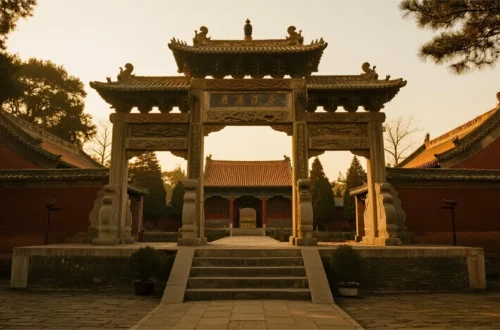
If you’re visiting Qufu, the birthplace of Confucius, there are a few must-see sites that bring his legacy to life. The Confucius Temple is the world’s largest temple dedicated to him, with stunning architecture and rich history. Nearby, you can explore the Confucius Mansion, once home to his descendants, and the peaceful Cemetery of Confucius, where several generations of his family are buried. These sites offer a deep dive into Confucius biography and ancient Chinese culture. For detailed visitor info, check out the Confucius Temple and Confucius Mansion pages.
Every September, Qufu hosts the Confucius Cultural Festival, featuring traditional rituals and performances honoring his teachings and life. It’s an unforgettable experience to see local people celebrate filial piety principles and Confucian values in a living context.
For US visitors planning a trip, spring and autumn are the best seasons to enjoy pleasant weather and avoid the summer tourist rush. Make sure to prepare your visa ahead of time and consider booking guided tours through the Qufu Travel Guide to get the most out of your visit. Walking the ancient paths of Qufu really connects you to history and the timeless wisdom Confucius shared, making it more than just a trip—it’s a journey into the heart of moral education China holds dear. For advice on the best times to visit, the Qufu weather guide is a great resource.


You May Also Like

Confucius Plaza NYC History and Cultural Guide to Chinatown Landmark
What Is the Meaning of Qufu Exploring Confucius’ Hometown and Heritage