Confucius Museum Qufu Travel Guide Exhibits Hours and Tips
Planning a trip to Qufu and wondering if the Confucius Museum Qufu is worth adding to your itinerary?
If you’re interested in Confucius, Chinese culture, or simply want more than a quick walk through the Temple of Confucius, this modern museum is your missing piece. It brings over 700,000 Confucius-related relics and centuries of Kong Family Mansion collections together in one high-tech, story-driven space—with free admission.
In this guide, you’ll see how the Confucius Museum in Qufu transforms ancient philosophy into an immersive experience, how to visit it easily from the high-speed rail station, and how to combine it with Qufu’s classic “San Kong” sites for a perfect cultural day.
Confucius Museum Qufu: History and Background
If you’re coming to Qufu for Confucius, the Confucius Museum is the modern gateway to everything you’re about to see in the “San Kong” UNESCO sites: the Temple of Confucius, the Kong Family Mansion, and the Cemetery of Confucius. I built this guide specifically for travelers who want more than just pretty courtyards – you want the story, the objects, and the context behind them.
Origins and Planning of the Confucius Museum in Qufu
For centuries, the most important Confucian relics were locked away inside the Kong Family Mansion. They were precious, fragile, and honestly not very accessible. As tourism to Qufu grew and conservation needs became urgent, the city planned a modern Confucian culture museum to:
- Protect original relics in a climate‑controlled, secure space
- Open up the massive Kong family collection to the public
- Build a “living classroom” for Confucianism, not just a storage hall
The Confucius Museum Qufu project was designed as a national‑level cultural landmark, connecting traditional Confucian heritage with a contemporary museum experience that works for both local school groups and international visitors.
Preserving and Displaying Kong Family Mansion Relics
The core of the museum is the collection of over 700,000 relics from the Kong Family Mansion, some of which had never been publicly shown. The goals are clear and very focused:
- Conservation first – protect wood, silk, paper, and bronze from humidity, fire, and wear
- Public access – turn archives and heirlooms into visible, understandable exhibits
- Context – explain how these objects connect to Confucius’ teachings, the Analects, and Chinese history
Instead of only seeing replicas in the San Kong sites, you meet the authentic books, robes, ritual vessels, and documents that defined the Kong lineage for more than 2,000 years.
Opening in 2019: A Modern Confucian Culture Hub
The Confucius Museum Qufu officially opened to the public in 2019, instantly becoming the city’s modern cultural anchor. From day one, it was planned as more than just a static museum:
- A research and education center on Confucianism and Chinese philosophy
- A public cultural hub with lectures, school programs, and special exhibitions
- A weather‑proof stop where you can understand Confucianism comfortably before or after walking the historic sites
For travelers, that means you get a clear, structured “crash course” in Confucius before you step into the ancient courtyards and stone tablets outside.
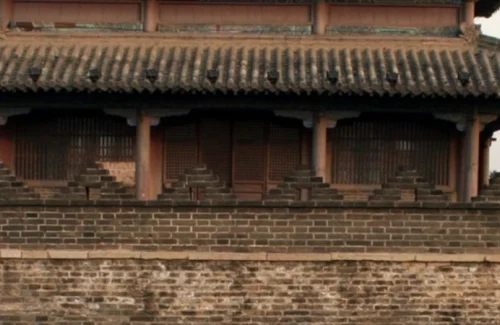
Architecture: Modern Design with Han-Style Qufu Elements
Architecturally, the Confucius Museum blends modern minimalism with Han‑style and traditional Qufu elements:
- Low, horizontal massing that echoes ancient palace and temple layouts
- Rooflines and courtyards inspired by Han‑style architecture and local Qufu design
- Warm stone, wood tones, and filtered natural light that reflect Confucian aesthetics of balance and modesty
The building feels contemporary but still rooted in the same cultural soil as the Temple of Confucius. It’s intentionally designed so you feel you’re in Qufu, not just in a generic modern museum.
Relationship with the “San Kong” UNESCO Sites
The San Kong – the Temple of Confucius, Kong Family Mansion, and Cemetery of Confucius – are UNESCO World Heritage sites and the heart of Qufu’s Confucian heritage. The Confucius Museum doesn’t replace them; it completes them:
- The San Kong give you the atmosphere: ancient cypress trees, stone paths, incense, and imperial memorial tablets.
- The Confucius Museum Qufu gives you the explanations: artifacts, timelines, multimedia displays, and clear narratives in one place.
Think of the museum as the interpretive center for the entire Confucius experience in Qufu. You see where Confucius lived, taught, and is honored in the San Kong; you learn what it all means inside the museum.
How the Museum Fits into the Confucian Heritage Experience
If you care about understanding Confucianism rather than just “checking off” famous sites, the Confucius Museum is essential. It ties everything together:
- You get a structured overview of Confucius’ life, teachings, and legacy.
- You see how the Kong family preserved and passed down his heritage.
- You can connect ancient texts and objects with the real courtyards, halls, and tombs you walk through later.
In practical terms:
- Visit the Confucius Museum Qufu to build your foundation.
- Then explore the San Kong to feel the weight of history in the original spaces.
Together, they give you a full Confucian journey – one part intellectual, one part emotional, all rooted in Qufu, the birthplace of Confucius and the core of Qufu Confucian heritage.
Confucius Museum Qufu Location & How to Get There
Exact Location on Confucius Avenue
The Confucius Museum Qufu (曲阜孔子博物馆) sits on the south section of Confucius Avenue (Kongzi Dadao) in Qufu, Shandong.
Most maps list it as:
Confucius Museum, Confucius Avenue, Qufu City, Shandong (near the South New District)
If you’re using Google Maps, Apple Maps, or Gaode/DiDi, just search “Confucius Museum Qufu” and navigate directly. It’s a big, standalone modern complex, so it’s hard to miss once you’re near Confucius Avenue.
Distance from the “San Kong” UNESCO Sites
If you’re planning your Confucius heritage day, these rough distances help:
- Temple of Confucius (Confucius Temple)
- Distance: ~5–6 km
- Taxi/ride‑hailing: ~15–20 minutes
- Bike: ~25–30 minutes
- Kong Family Mansion
- Next to the Temple of Confucius, so timing is basically the same
- Cemetery of Confucius (Confucius Forest)
- Distance from the museum: ~7–8 km
- Taxi/ride‑hailing: ~20–25 minutes
- To plan that part of your day, this detailed guide to the Confucius Cemetery in Qufu is very handy.
You can easily see the museum plus the “San Kong” in one full day if you start early and keep your pace steady.
From Qufu East High‑Speed Rail Station (Most Common for U.S. Travelers)
Most visitors from the U.S. will arrive via Qufu East Railway Station (Qufu East HSR) on high‑speed trains from Beijing, Shanghai, or Qingdao.
- Distance: ~10–12 km to the Confucius Museum
- Taxi/ride‑hailing:
- 20–30 minutes depending on traffic
- This is the easiest and most time‑efficient option
- Public bus:
- Lines change, but look for buses heading toward “市区 / downtown” or “孔子博物馆”
- Expect 40–60 minutes with stops and possible transfers
If you’re doing a same‑day Qufu trip by high‑speed rail, I recommend taxi or DiDi straight from Qufu East to the museum, then work your way into the old town and the Temple/Mansion area.
Local Transportation: Taxi, Ride‑Hailing, Bus
Taxi
- Readily available at Qufu East Station and around central Qufu
- Fares are inexpensive by U.S. standards
- Show the driver the Chinese name: “曲阜孔子博物馆”
Ride‑Hailing (DiDi, etc.)
- Best option if you’re used to Uber/Lyft
- Works very similarly; use hotel Wi‑Fi or an eSIM for data
- Type “Confucius Museum Qufu” and confirm the map pin
Public Buses
- Cheap but slower and less English‑friendly
- Stops are marked in Chinese; ask locals or hotel staff which line goes nearest “孔子博物馆”
Walking & Cycling to Confucius Museum Qufu
If you’re already staying or sightseeing in southern Qufu or near Confucius Avenue:
- Walking:
- From nearby hotels: 10–30 minutes depending on distance
- Sidewalks are generally wide and flat
- Cycling:
- Shared bikes and e‑bikes are common in Qufu
- Museum has lots of open space, and the Confucius Avenue area is relatively bike‑friendly
If you prefer to stay close to the historic core, this list of the best Qufu hotels near the Confucius Temple is a good starting point. From there, you can bike or taxi to the museum.
Easy Routes to Combine the Museum with Other Qufu Attractions
For a simple, no‑stress route, I’d line it up like this:
- Route A (Museum First):
- Qufu East HSR → Confucius Museum (taxi/DiDi)
- Museum → Temple of Confucius & Kong Family Mansion
- Finish at Confucius Cemetery (Confucius Forest)
- Back to Qufu East HSR from the Cemetery or old town
- Route B (Old Town First):
- Qufu East HSR → Temple of Confucius & Kong Family Mansion
- Walk or short ride to Confucius Cemetery
- Late afternoon at Confucius Museum (great in bad weather or summer heat)
- Taxi/DiDi back to Qufu East HSR
Both work well for a 1‑day Confucian heritage loop.
Access from Mount Tai and Nishan Sacred Land
If you’re pairing Qufu with other Shandong spiritual spots like Mount Tai or Nishan Sacred Land, you’re still in easy reach of the Confucius Museum:
- From Mount Tai (Tai’an / Tai’an HSR Station):
- High‑speed train: Tai’an → Qufu East (about 30–40 minutes)
- Then taxi/DiDi to Confucius Museum (20–30 minutes)
- This combo works as a 2‑day Mount Tai + Qufu cultural trip
- From Nishan Sacred Land (Birthplace of Confucius):
- By car/taxi: roughly 30–40 minutes to Qufu city
- Most tour drivers will know “曲阜孔子博物馆” if you add it to your Nishan itinerary
If you’re coming from the U.S. and want to keep logistics simple, treat Qufu East Station as your hub, then layer on Confucius Museum, the “San Kong,” and either Mount Tai or Nishan Sacred Land as your side trips.
Confucius Museum Qufu opening hours & tickets
Current opening hours & last entry
Confucius Museum Qufu generally runs on a full-day schedule with a fixed last entry:
- Opening hours: around 9:00 a.m. – 5:00 p.m.
- Last entry: usually 30–60 minutes before closing
- The museum may adjust hours for big events or maintenance, so I always recommend checking locally at your hotel or on official city channels the day before you go.
Weekly schedule, Mondays & holidays
- The museum is normally open daily, including weekends.
- Monday closures or half-days can happen for internal maintenance, especially outside major holidays.
- During Golden Week, national holidays, and the Confucius Cultural Festival, the museum typically stays open and can extend hours, but crowds spike hard.
If you’re timing a trip around seasons and holidays, this Qufu weather and best time to visit guide is a useful reference.
Tickets, free admission & ID
One of the big perks: Confucius Museum Qufu currently offers free admission.
- Ticket price: usually free (policy can change, but that’s the current norm).
- What you need:
- Passport for foreign visitors (for registration/real-name booking).
- You may need to reserve a free time slot through a mini-program or at the on-site ticket counter, especially on weekends and holidays.
- Some special exhibitions or events may charge a separate small fee.
Seasonal changes & special periods
- Summer: longer daylight, possible slightly extended hours on peak days.
- Winter: it can get cold, but the museum is fully indoor and heated, making it one of the best bad-weather options in Qufu.
- Festival periods (late September around Confucius’ birthday): expect extended hours + heavy crowds + tighter entry control.
On-site services & facilities
Confucius Museum Qufu is set up to be comfortable and practical:
- Information desk: right near the entrance for maps, directions, and basic English support.
- Lockers / baggage storage: for backpacks and suitcases (very handy if you’ve just come from the high-speed rail).
- Rest areas: benches and seating zones spread through the main circulation routes.
- Cafes / light snacks: simple drinks and snacks; don’t expect full Western meals, but you’ll find enough to recharge.
- Gift shop: Confucius-themed books, souvenirs, and cultural items.
Accessibility for seniors, kids & limited mobility
The museum was built as a modern, barrier-free site, which is a big plus if you’re traveling with family:
- Elevators and ramps cover all main exhibition levels.
- Wide walkways for strollers and wheelchairs.
- Accessible restrooms on key floors.
- Plenty of seating for seniors to take breaks.
- Indoor environment with stable temperature, great for kids and older travelers who can’t handle heat or cold for long.
Photography rules & restrictions
Photography is generally allowed, but with clear limits:
- Non-flash photography is usually OK in most public areas and general galleries.
- No flash, no tripods, no selfie sticks near ancient books, archives, and fragile relics to protect them.
- Some special exhibits and immersive theaters may be marked “no photos”—follow posted signs and staff instructions.
- If you’re planning social media shots, keep it quiet and respectful, especially near ritual and music exhibits.
If you’re building a full trip around this, you can also cross-check hours with nearby sites using this detailed Confucius Mansion Qufu guide with history and travel tips.
Confucius Museum Qufu Layout & Architecture
The Confucius Museum Qufu is big but easy to handle. The total site covers about 55,000 sqm, with roughly 17,000 sqm of exhibition space, so you get a full Confucian culture experience without feeling overwhelmed.
Overall Layout & Flow
The museum is organized in a clear, front‑to‑back flow:
- Main entrance & Preface Hall – wide lobby, ticket/ID check, intro displays.
- Central main halls – large permanent galleries focused on Confucius’ life, teachings, and the Kong Family Mansion relics.
- Themed side galleries – ritual, music, global influence, multimedia spaces.
- End zone – temporary exhibits, cultural shop, rest areas, and exit.
Circulation is basically one main loop, so you can follow the path naturally without backtracking. If you’re pairing this with the nearby Temple of Confucius history and architecture, the layout makes it easy to “study inside, then compare outside.”
Architectural Style & Design
The building mixes modern lines with Han-style elements, which fits the Confucian vibe:
- Low, horizontal massing that echoes traditional Qufu courtyards.
- Rooflines and facades hint at Han-dynasty architecture, but with clean, minimal detailing.
- Warm stone, wood tones, and bronze-colored metal keep the look grounded and calm.
The design is intentional: it feels like a serious cultural site, but still like a modern museum Americans are used to.
Light, Space & Confucian Aesthetics
Inside, the Confucius Museum Qufu uses light and space to match Confucian ideas of balance and order:
- High atriums and open plazas at key nodes.
- Soft natural light where possible; spotlights on important relics.
- Clear sightlines and symmetry that echo ritual order and hierarchy.
You get quiet, wide corridors, plenty of benches, and a calm atmosphere—good for seniors, kids, and anyone who wants to actually think about what they’re seeing.
Digital, Multimedia & Interactive Design
This is not just a relic-in-glass museum. Across the Qufu Confucius Museum exhibits you’ll see:
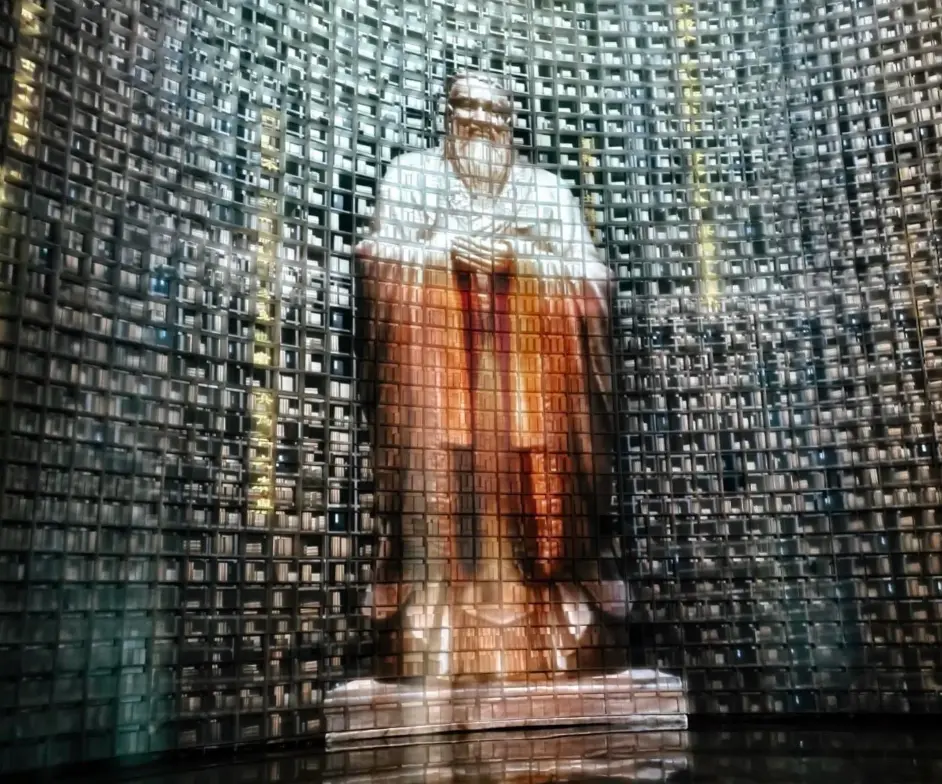
- Large projection walls telling Confucius’ story.
- Touchscreens for timelines, maps, and Analects explanations.
- Immersive sound-and-light spaces for rituals and music.
- Kid-friendly interactive stations that explain Confucian values in simple terms.
Most core multimedia has basic English options, making it accessible even if you don’t read Chinese.
Wayfinding & How to Navigate
Navigation is straightforward, even on a first visit:
- Bilingual signs (Chinese/English) at major junctions.
- Floor maps near elevators, rest areas, and the main stair cores.
- Clear zone labels (e.g., “Life of Confucius,” “Ritual & Music”) so you always know what’s next.
- Wide, barrier-free corridors for strollers and wheelchairs.
If you like to plan your route, grab a paper map at the information desk as you enter, then just follow the main loop and dip into side galleries that interest you most.
Main Themes at Confucius Museum Qufu
At Confucius Museum Qufu, I designed the exhibitions to walk you through a clear storyline: who Confucius was, what he taught, and why it still matters worldwide today. The whole space reads almost like a live documentary.
Core Narrative: Life → Teachings → Influence
The core narrative starts with Confucius’ life in Qufu—his family background, early struggles, travels, and his work as a teacher. From there, the galleries shift into his teachings and classics (like the Analects and other Confucian texts), then move on to how his ideas shaped Chinese government, education, and etiquette, and finally how Confucianism spread across East Asia and influenced modern societies, including Chinese communities abroad and places like Confucius Plaza in New York City.
Upper vs. Lower Exhibition Sections
The museum is usually laid out in two main layers:
- Lower level: Big-picture story and immersive scenes
- Intro to Qufu and Confucius’ life
- Large multimedia timelines and maps of his travels
- Recreated study spaces, ritual scenes, and ancient classrooms
- Upper level: Deeper dive into thought and legacy
- Confucian philosophy, ethics, and political thought
- Global spread and modern interpretations
- The ongoing story of the Kong family and Confucian heritage
This split keeps casual visitors engaged on the lower floors while giving serious learners more depth upstairs.
Relics + Multimedia + Reconstructed Scenes
I’m careful to balance authentic historical relics with modern storytelling tools:
- Original Kong Family Mansion relics, ritual bronzes, robes, and documents
- Multimedia walls that animate key ideas from the Analects and other classics
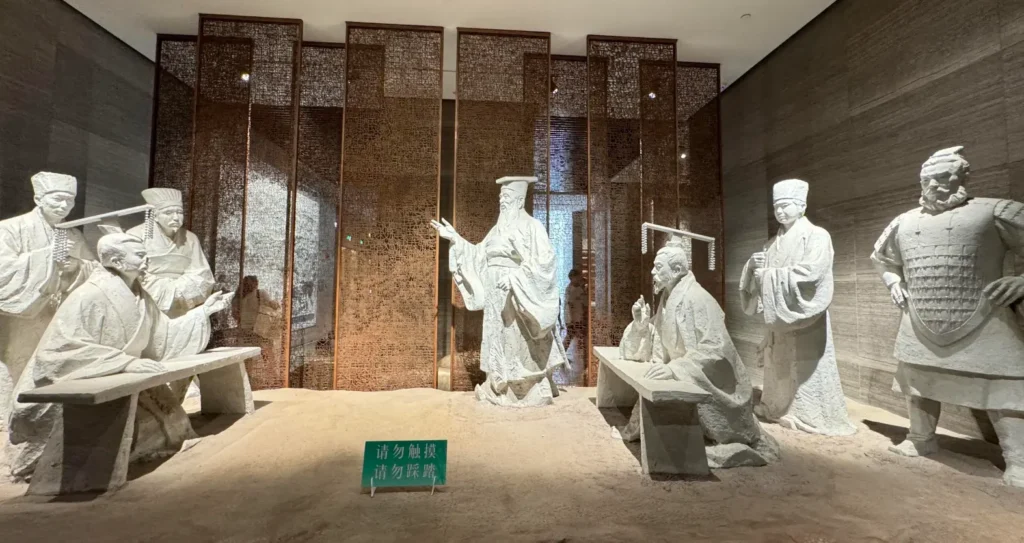
- Reconstructed scenes (ancestral halls, ritual spaces, teaching settings) so you can “feel” the world Confucius lived in
Nothing is just thrown in a glass case. Each object is anchored in a scene or a story so you immediately see why it matters.
Confucian Values Front and Center
The exhibitions keep circling back to core Confucian values:
- Ren (benevolence / humaneness) – how to treat others
- Li (ritual / proper conduct) – how to act in society
- Xiao (filial piety) – family and respect for parents
- Yi (righteousness) – doing the right thing over personal gain
Panels and interactives break these down in plain language, so even if you’ve never read the Analects, you’ll walk away with a working grasp of what Confucius actually stood for. If you want a bit of extra context before you go, skimming some key Confucius quotes and sayings helps everything click faster on site.
Connecting Ancient Texts to Modern Life
A big part of the exhibition concept is showing how 2,500-year-old ideas still show up in modern life:
- Simple scenarios about work ethics, leadership, and family life linked to Confucian concepts
- Short videos and digital narratives explaining how “respect,” “responsibility,” and “harmony” play out today in schools, offices, and communities
- Sections that compare traditional interpretations with how modern China—and the world—re-reads Confucius now
If you’re coming from the U.S., this structure makes the Confucius Museum Qufu feel less like an ancient-text archive and more like a crash course in Chinese values and social logic, set up in a way that’s intuitive, visual, and easy to digest in a single visit.
Must-see halls at Confucius Museum Qufu
If you don’t have all day, you need a game plan. Here’s how I’d tackle the Confucius Museum Qufu if you’re coming from the U.S. and want maximum value in minimal time.
Preface Hall – start here
This is your launchpad.
- Large multimedia wall that quickly explains Confucius, Qufu, and the San Kong sites
- Short intro videos with captions, simple enough even if you’re new to Chinese history
- Great place to grab an overview before you hit the Temple and Kong Family Mansion later
Tip: Spend 10–15 minutes here to “set the scene” for the rest of your Qufu Confucian heritage trip.
Life and Times of Confucius gallery
This section makes Confucius feel like a real person, not just a name in a book.
- Clear timeline of his early life, teaching career, and long travels across different states
- Scenes with disciples, court life, and teaching moments
- Good for teens and adults who want a straight, story-style walkthrough
Focus on:
- His difficult early years
- Why rulers didn’t fully adopt his ideas during his lifetime
- How his students kept the teachings alive
Teachings and Classics section
Here’s your crash course in Confucian philosophy without reading a full translation of the Analects.
- Key quotes from the Analects and other Confucian classics pulled out and explained in plain language
- Displays that connect ideas like benevolence (ren), ritual (li), and filial piety to daily life
- Some digital screens let you tap to see how specific teachings show up in modern education, work, and family
If you’re short on time:
- Prioritize the panels that main concepts
- Take phone photos of the English explanations to reread later
Rituals and Music Hall
This is one of the most visually striking spaces.
- Recreated ceremonies, ritual vessels, and musical instruments used in Confucian rites
- Stage-style setups that show how official rituals looked in imperial times
- Sometimes background music or projected performances that make it feel alive
Don’t miss:
- The set of bronze bells and stone chimes
- Displays on how ritual isn’t just “religion,” but social order and respect
Global Impact Gallery
If you’re coming from the United States, this is where it connects back home.
- Exhibits on how Confucianism spread across East Asia and later entered Western academic and cultural debates
- Maps of Confucius Institutes worldwide and references to Confucian ideas in modern education and ethics
- Good English-friendly panels showing how terms like “Asian values,” meritocracy, and civil service exams tie back to Confucian thought
This gallery makes it very clear why Qufu is more than “just another Chinese historical city.” For a broader context on how this fits into the city’s story, you can pair it with a full Qufu Confucius heritage guide like this overview of Qufu’s Confucian culture and key sites.
Immersive theaters and digital experiences
Even if you’re not usually into museums, the interactive exhibits at the Confucius Museum Qufu are worth your time.
Look for:
- Short immersive films about Confucius’ travels and teaching scenes
- Digital “classroom” setups where you can virtually sit in on ancient-style lessons
- Projection shows that walk you through a Confucian ceremony step by step
These are ideal for:
- Kids and teens who need something more visual
- Travelers who don’t speak Chinese but want the story through images and sound
Recommended 1–2 hour route
If you only have 60–120 minutes at the Confucius Museum Qufu, this is the lean route I’d use:
For a 1-hour quick visit:
- Preface Hall – 10–15 mins (overview)
- Life and Times of Confucius gallery – 15–20 mins (biography)
- Teachings and Classics section – 20 mins (core ideas)
- One immersive theater or digital show – 10–15 mins (wrap-up)
For a 2-hour deeper visit:
- Preface Hall – 10–15 mins
- Life and Times of Confucius – 20–25 mins
- Teachings and Classics – 25–30 mins
- Rituals and Music Hall – 20 mins
- Global Impact Gallery – 20 mins
- Finish with 1–2 immersive experiences – 15–20 mins
This way, you cover:
- Who Confucius was
- What he taught
- How the teachings were practiced
- Why his ideas still matter worldwide
From there, you’ll be ready to hit the Temple of Confucius and San Kong sites with a lot more context than you’d get by just walking through courtyards. For building that full-day plan around the museum and historic sites, it pairs well with a broader Qufu Confucius travel guide.
Highlights and Rare Artifacts in Confucius Museum Qufu
When I designed this Confucius Museum Qufu travel guide section, I focused on what most U.S. travelers actually want to know: “What’s worth my time inside?” Here’s how to hit the highlights fast.
Massive Kong Family Relic Collection
The Confucius Museum Qufu holds over 700,000 relics from the Kong Family collection, making it the core archive of Confucian heritage in China. You won’t see this depth even at the Kong Family Mansion itself, which is why I always treat the museum as the “vault” behind the historic courtyards you’ll walk through later. If you want context on how the family lived and ruled their estate, this collection fills in the gaps left by the Kong Family Mansion in Qufu.
Ancient Bronzes and Ritual Vessels
One of the most impressive parts of the Confucius Museum Qufu exhibits is the display of:
- Ancient bronzes and ritual vessels used in Confucian ceremonies
- Ceremonial instruments like bells and stone chimes that tie directly into classical ritual music
These pieces show how Confucianism wasn’t just a philosophy; it was a full ritual system. Pay attention to the inscriptions and shapes—many were designed to reflect hierarchy, order, and respect, key Confucian values.
Ming–Qing Costumes and Official Robes
Look for the Ming and Qing dynasty costumes and official robes worn by generations of Confucius’ descendants, who held hereditary titles. These robes are:
- Loaded with rank symbols (dragons, cranes, clouds)
- A visual shortcut to understanding Confucian ideas about status, duty, and decorum
They’re also great for photos (where allowed) and for explaining to kids how clothing signaled power in imperial China.
Archives, Manuscripts, and Family Documents
In the archives section, you’ll find Song and later dynasty manuscripts, contracts, edicts, and family documents. These are some of the most revealing items in the museum:
- Land deeds and family agreements that show how Confucian ethics played out in everyday life
- Imperial documents confirming privileges for the Kong lineage
- Handwritten notes that bridge the gap between textbook Confucianism and real-world practice
If you’re into history, this is where Confucianism stops being abstract and starts looking like a working social system.
Ancient Books and Confucian Classics
The Confucius Museum Qufu also holds an outstanding set of ancient books and Confucian classics, including editions of:
- The Analects
- The Book of Rites
- Commentaries copied and passed down by the Kong family
These give you a sense of how Confucius’ words were transmitted, edited, and studied over centuries. For deeper reading later, you can pair what you see here with modern introductions like the ones I cover in my guide to choosing a good book about Confucius and his thought.
Treasures from the Kong Family Mansion
Some of the precious items from the Kong Family Mansion on display here never appear in the mansion’s public areas, including:
- Personal everyday objects from high-ranking descendants
- Unique ritual items only used for special ceremonies
- Gifts from emperors to the Kong family
This is where you see how closely tied the family was to imperial power—and why Qufu became the symbolic capital of Confucianism.
Stories That Make the Artifacts Click
The real strength of the Confucius Museum Qufu is how it wraps context stories around each standout piece:
- Labels explain who used it, when, and why it mattered
- Multimedia displays show the original settings—court, classroom, or ritual hall
- Short narratives connect artifacts to key Confucian ideas like filial piety, benevolence, and proper conduct
If you move slowly through one or two key sections and really read these stories, you’ll walk out with a much clearer, practical sense of what Confucian culture looked like in real life—not just in theory.
Interactive and Multimedia Experiences at Confucius Museum Qufu
The Confucius Museum Qufu leans hard into tech, which makes it a lot more engaging than you might expect from a “philosophy” museum.
Digital storytelling zones
You’ll find several digital storytelling zones that walk you through Confucius’ life and travels:
- Large curved screens replay key moments from his childhood, teaching career, and journeys through the states.
- Short animated films explain who Confucius was and why Qufu matters, which is helpful if you haven’t already read up on who Confucius was and why he shaped Chinese culture.
Touchscreens, AR, and VR-style setups
For younger visitors (and honestly most adults from the US), the highlights are:
- Touchscreen timelines where you tap disciples, rulers, and events to see quick stories.
- AR/VR-style installations that “drop” you into a Confucian school or ritual scene.
- Gesture-based games where kids match virtues, rank rituals, or “advise” an ancient ruler.
Most of the core interfaces are visual enough that you can follow along even with limited Chinese.
Immersive ritual sound-and-light shows
In the rituals and music sections, expect:
- Darkened halls with surround sound and projection mapping that recreate ceremonial music and court rituals.
- Floor and wall projections that react to your movement, making the rites feel more alive instead of just “old objects in glass cases.”
Language support and English-friendly content
From a US visitor standpoint, language is always the worry. Here’s how it actually feels:
- Key multimedia shows usually include bilingual Chinese–English subtitles.
- Many touchscreens have at least basic English menus for main sections.
- Where the English is thin, the visuals (maps, icons, animation) still get the point across, especially in the digital Confucius life stories similar to the short, quote-based intros you’d see on a Confucius quotes overview.
Hands-on learning for kids and students
If you’re visiting with kids or teens, this is where the museum really works:
- Hands-on stations where children can:
- Try writing simple Chinese characters linked to Confucian terms.
- Arrange “family hierarchy” or “ritual order” blocks like puzzles.
- Listen to short, story-based explainers about respect, family, and learning.
- Short-form content (1–3 minutes each) works well for school-age attention spans.
Best photo and social-friendly spots
For social media and quick photos, look for:
- The large Confucius statue and digital halo walls near the main multimedia halls.
- Immersive projection rooms where you’re surrounded by calligraphy or bamboo forest imagery.
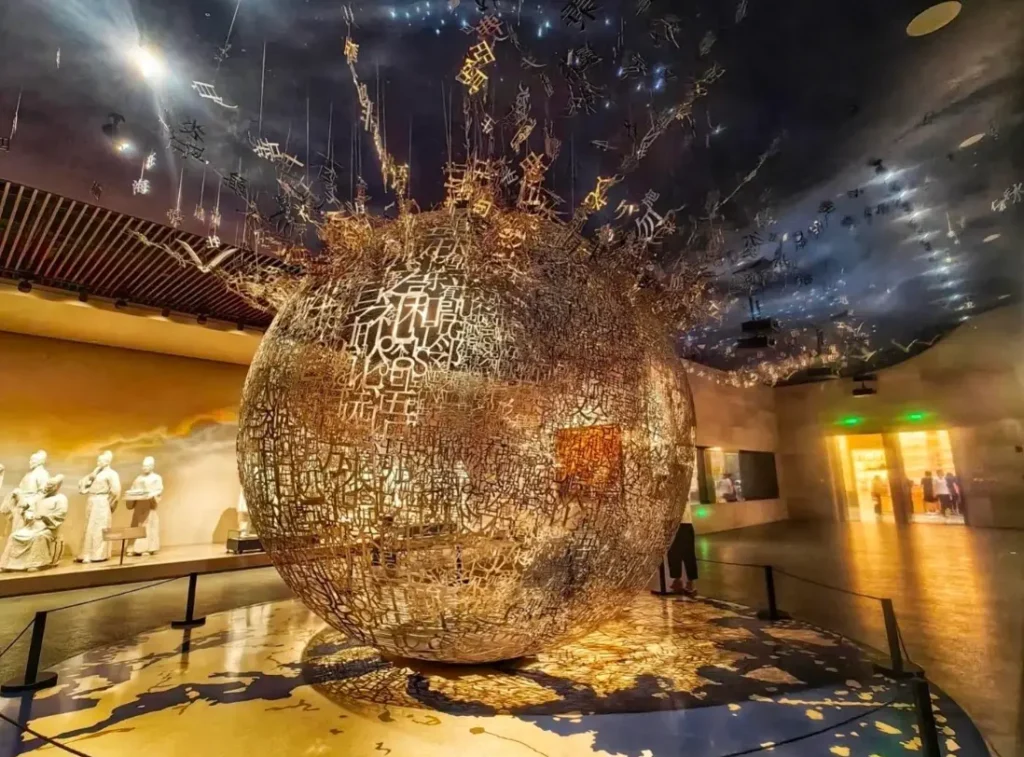
- Installations that layer ancient text over modern light design, which make strong, clean shots for Instagram or travel blogs.
The mix of Confucius Museum interactive exhibits and multimedia displays makes this museum feel current and digestible, especially if you’re coming from the US and want Confucian thought delivered in a visual, tech-forward way.
Why Visit Confucius Museum Qufu (Not Just the San Kong)
If you’re coming all the way to Qufu, it’s worth seeing both the Confucius Museum Qufu and the classic “San Kong” sites (Temple, Mansion, Cemetery of Confucius). They do very different things and actually make each other better.
How the Museum Complements the San Kong Sites
- Temple of Confucius gives you the sacred, ceremonial side of Confucius in a historic space (more on that in this deep dive into the Confucius Temple in Qufu).
- Kong Family Mansion shows you how his descendants actually lived.
- Cemetery of Confucius is about memory, respect, and lineage.
The Confucius Museum Qufu pulls it all together in one place with clear timelines, maps, and context. You see the Kong Family Mansion relics up close, then walk into the real mansion and suddenly everything clicks.
Modern Museum vs. Ancient Courtyard Experience
- San Kong = ancient courtyards, stone steles, incense, big trees, and atmosphere. It’s powerful, but not always well explained in English.
- Confucius Museum Qufu = clean, modern galleries, multimedia displays, models, and English-friendly panels that break down who Confucius was, what he taught, and why it matters.
If you like old architecture and vibes, do San Kong. If you also want to understand Confucianism without reading a textbook, you need the museum too.
Get a Deeper Understanding of Confucian Thought
The museum basically works as a Confucian crash course:
- Simple breakdowns of key ideas like benevolence, ritual, and harmony
- Clear links between Confucius’ teachings and government, education, and family life
- Exhibits that connect ancient texts with modern China and daily life
I recommend:
- Museum first if you want background before visiting the Temple and Mansion
- Museum after if you’ve already walked the San Kong and now want to make sense of what you saw
Either way, it deepens the entire Qufu Confucian heritage experience. If you want more historical context, this short overview of Qufu history and culture also pairs well with a museum visit.
Indoor, Weather-Proof Cultural Experience
For U.S. travelers used to climate-controlled museums, Confucius Museum Qufu is a relief:
- Air-conditioning / heating for hot summers and cold Shandong winters
- Fully indoor, so it’s ideal for rainy, windy, or smoggy days
- Lots of seating and rest areas, which you won’t find as easily inside historic courtyards
If you’re traveling with kids, seniors, or doing a Qufu day trip by high-speed rail, the museum is one of the most comfortable ways to get plenty of culture without getting exhausted.
Added Value for First-Timers and Repeat Visitors
- First-time visitors: Use the museum to quickly understand Confucius, then hit the Temple and Mansion with more appreciation.
- Repeat visitors: If you’ve seen the San Kong before, the museum gives you a fresh angle—rare artifacts, deeper stories, and modern takes on Confucianism.
- Short on time: Even a focused 1–2 hour visit gives you more understanding than walking courtyards with no explanation.
Who Will Enjoy Confucius Museum Qufu Most
The museum is especially good for:
- Families – interactive screens, visuals, and clear storytelling make Confucian ideas less abstract for kids.
- Students & teachers – well-organized exhibits that are perfect for school projects, philosophy classes, and China studies.
- Culture & history lovers – if you’re into Chinese philosophy, ritual, or imperial history, the curated Confucius Museum exhibits go deeper than what you can pick up outdoors.
- Casual travelers – even if you’re not a “museum person,” the multimedia and reconstructions keep it interesting and easy to follow.
If you only do the San Kong, you get the mood of Confucianism. Add the Confucius Museum Qufu, and you get the meaning too.
Educational value at Confucius Museum Qufu
Confucius Museum Qufu is one of the best places in China to get a clear, fast, and practical feel for Confucianism—especially if you’re coming from the U.S. and don’t have a philosophy background.
How the museum explains Confucian philosophy in simple terms
The museum breaks down big ideas from Confucius into everyday language and scenes you can relate to:
- Short, plain-language panels explain key ideas like ren (benevolence), li (ritual/propriety), and xiao (filial piety) using real-life examples: family, work, and community.
- Scene recreations show how Confucian values played out in a classroom, court, or home.
- Comparisons to today highlight how ideas like respect, responsibility, and integrity show up in modern China, schools, and business.
If you want a visual primer before you go, the symbolic breakdown on this guide to Confucius symbols in Qufu lines up well with what you’ll see in the museum.
Ethics, family values, and state governance sections
The best learning zones for most visitors:
- Ethics & personal conduct: Focus on character, honesty, and self-discipline. Great for anyone interested in leadership or personal growth.
- Family & relationships: Covers filial piety, respect for elders, and family roles—very useful if you want to understand East Asian family culture.
- State & governance: Explains how Confucian ideas shaped Chinese government, exams, and official culture for 2,000+ years.
All of this is laid out with translations and clear diagrams, so even if you’re new to Chinese history, you can follow along.
Resources for students, teachers, and academic visitors
If you’re a student, teacher, or doing research on Confucianism or Chinese history, Confucius Museum Qufu is packed with material:
- Bilingual labels (Chinese with English) on major exhibits and themes.
- Original texts and commentaries displayed with brief explanations—useful for AP World History, Asian Studies, philosophy, and religion courses.
- Education programs (usually in Chinese): themed tours, lectures, and activity days, especially around the International Confucius Cultural Festival.
- If you’re planning ahead for a class trip or study-abroad group, you can use the broader Qufu tourism guide to structure a full Confucius-focused itinerary around the museum.
Guided tours, lectures, and cultural workshops
On-site offerings change by season, but typically include:
- Chinese-language guided tours at set times (often free, first-come-first-served).
- Special lectures by scholars during peak seasons and festivals.
- Hands-on workshops like calligraphy, ritual etiquette demos, or music linked to ancient rites (more common on weekends/holidays).
If you don’t speak Chinese, ask at the info desk about:
- Printed English maps or brief guides.
- Any English-friendly or audio-based options available that day.
Using the museum as a “crash course” in Confucianism
If you want to use Confucius Museum Qufu as your intensive intro to Confucianism:
- Start with the preface / intro hall to get the big picture in 10–15 minutes.
- Move through life → teachings → impact in order so things build logically:
- Confucius’ life and times
- Core teachings and classical texts
- How Confucianism shaped China and spread beyond
- Take photos of key diagrams, timelines, and quotes for later review.
- At the end, spend a few minutes in any “modern life” or “today’s Confucianism” section so it doesn’t just feel like ancient history.
In 60–90 minutes, you’ll have a solid base to understand the Temple of Confucius, Kong Family Mansion, and Chinese culture in general.
Tips for parents visiting with school-age kids
If you’re traveling with kids from the U.S., this is a surprisingly kid-friendly stop:
- Aim for 60–90 minutes inside with kids aged 7–14; don’t try to see everything.
- Focus on:
- Interactive screens and digital storytelling zones
- Recreated classrooms, rituals, and daily life scenes
- Hands-on or “try it yourself” areas (writing, puzzles, or role-play)
- Use simple hooks:
- “This is like their version of school rules.”
- “These are the values parents expected at home 2,000 years ago.”
- “This is how they chose government officials before modern exams.”
- Set ground rules: no running, quiet voices, no touching relics, but let them lead the way in interactive spaces and photo-friendly spots.
Handled right, Confucius Museum Qufu becomes more than a history stop—it’s a practical, relatable way to talk about respect, responsibility, and character with your kids while you’re actually standing in Confucius’ hometown.
Tips for an Enjoyable Visit to Confucius Museum Qufu
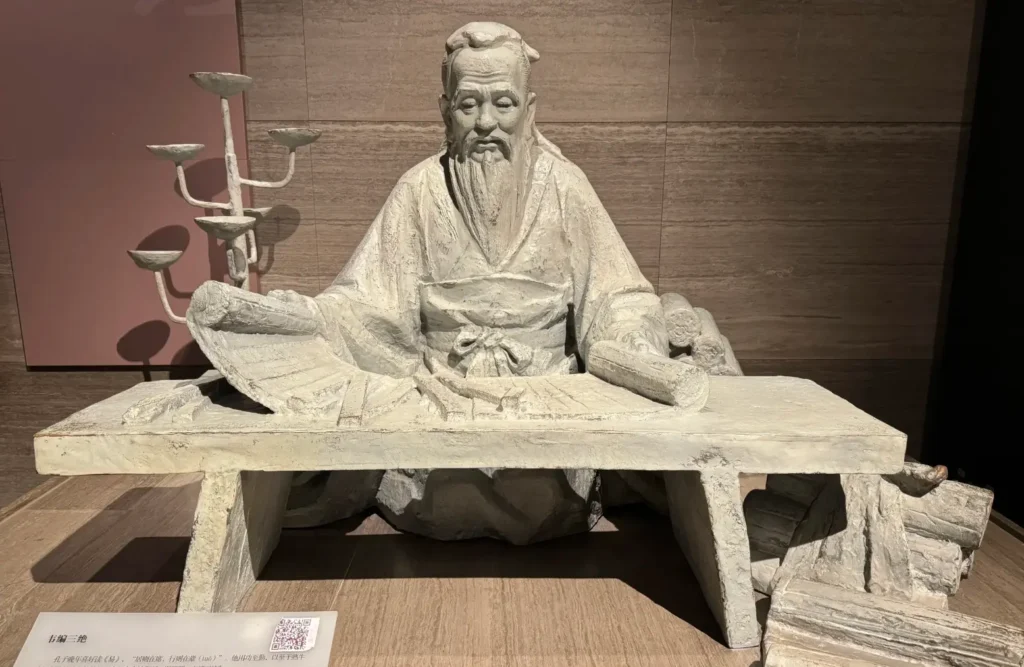
Recommended visit length
For most U.S. travelers, here’s what I recommend for the Confucius Museum Qufu:
- Quick stop (1–1.5 hours): Preface Hall + core Confucius life & teachings galleries + one multimedia experience.
- Standard visit (2–3 hours): Full main route, key relics from the Kong Family Mansion, plus a coffee/rest break.
- Deep dive (half-day): Every section + films + interactive zones, ideal if you’re really into Chinese philosophy.
If you’re planning your wider city day, it helps to look at a simple city layout first; this Qufu map and orientation guide gives a good, quick overview.
Best time of day & best seasons
To avoid crowds and school groups:
- Time of day:
- Aim for opening time in the morning or after 3 pm.
- Midday is usually busier, especially on weekends and Chinese holidays.
- Best seasons:
- Spring (April–May) and fall (September–October) are the sweet spot: mild weather, fewer tour groups than peak holidays.
- Winter is quieter and totally fine since the museum is indoors, but it can be cold outside.
What to see first if you’re short on time
If you only have 60–90 minutes, go in this order:
- Preface Hall – fast, multimedia intro to Confucius and Qufu.
- Life & Times of Confucius gallery – his story, travels, and disciples.
- Teachings & Classics section – Analects and core Confucian ideas.
- One immersive theater or digital experience – to lock in what you just learned.
Skip the smaller side galleries at first; you can always loop back if you have extra time.
What to wear & what to bring
You’ll walk a lot, even though it’s all indoors:
- Wear:
- Comfortable walking shoes (sneakers are perfect).
- Light layers – A/C can feel cool in summer; heating can feel warm in winter.
- Bring:
- Passport or ID (often needed for free admission registration).
- A small daypack only – large bags may need to go in lockers.
- Refillable water bottle (use designated drinking areas).
- Portable charger if you plan to use your phone for translations or photos.
Using rest areas, cafés, and nearby facilities
The Confucius Museum Qufu is designed for longer, comfortable visits:
- Rest areas: Benches and seating zones are spread through the main circulation route. Use them to pause and process what you’re seeing.
- Cafés / snacks: There’s usually at least one café or snack area inside or just outside the main entrance—good for a mid-visit break.
- Facilities:
- Restrooms are on multiple floors—watch for English signs.
- Lockers or baggage storage may be available near the entrance.
If you’re building a bigger day around the museum, this list of what to see in Qufu is useful for picking easy add-ons nearby: top Qufu Confucian attractions overview.
Etiquette in galleries & ritual-related areas
The Confucius Museum Qufu is a museum, but a lot of content is tied to ritual, ethics, and beliefs. I treat it with the same respect I would a religious site:
- Keep your voice low in galleries and especially in areas focused on rites, music, and ancestral worship.
- Follow photo rules:
- Look for camera icons or “No Photos” signs; some relics and films are restricted.
- Avoid flash where artifacts are sensitive.
- Be respectful of content:
- Don’t touch exhibits, altars, or ritual setups, even if there’s no barrier.
- Avoid posing in joking or exaggerated ways in front of Confucius statues or ritual scenes.
- With kids:
- Let them explore, but remind them it’s not a playground—running and shouting will draw attention.
Handled well, a visit to the Confucius Museum Qufu is smooth, low-stress, and a really efficient way to get a grip on Confucian culture before you walk the older “San Kong” sites around the city.
Guided Tours, Audio Guides, and Language Support at Confucius Museum Qufu
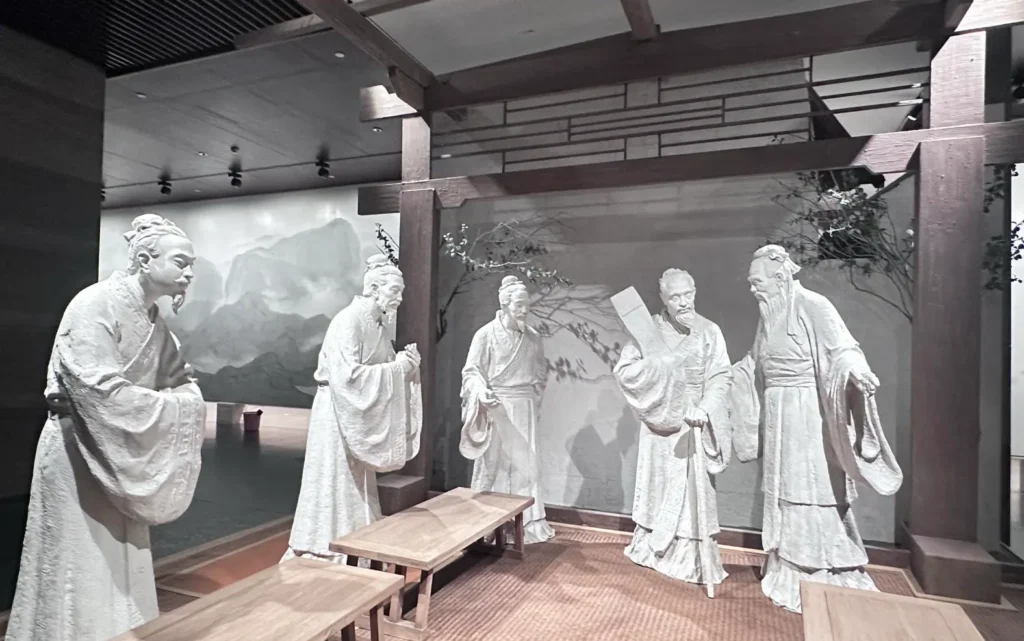
If you’re visiting Confucius Museum Qufu from the U.S. and don’t speak Chinese, you can still get a lot of value out of the visit—you just need a plan.
Guided Tours On-Site
- The museum usually offers Chinese-language guided tours at set times, especially on weekends and holidays.
- You can ask about tour times at the information desk in the main lobby; they’ll tell you the next available slot and meeting point.
- For private or English-guided tours, it’s best to arrange through a local travel agency or hotel in Qufu in advance. Many agencies that build Confucius-focused itineraries for Qufu and San Kong can also set up a guide to meet you at the museum.
English / Korean / Japanese Options
- English:
- Expect some English support, but not a full English-guided group tour every day.
- Key halls and major exhibits usually have bilingual (Chinese–English) labels and wall texts.
- Korean / Japanese:
- You may see limited Korean or Japanese signage in high-traffic areas, but it’s not museum-wide.
- If you need those languages for deeper context, bring your own guide or translator app.
Audio Guides & Apps
- The museum has official audio guide devices or QR-based explanations in many sections.
- Languages typically include Mandarin and partial English; availability can change, so confirm at the information desk when you arrive.
- You’ll often see QR codes next to displays. With a Chinese “super app” like WeChat and basic mobile data, you can scan and access:
- Extra text and images
- Short audio clips
- Occasionally short videos or AR-style content
If you’re planning your entire Qufu trip by rail, it’s smart to line this up with a bigger Qufu travel guide and access overview before you arrive.
How Much English Translation to Expect
- Good English coverage on:
- Main halls (Preface Hall, Confucius’ Life gallery, core classics)
- Big feature relics and “star” artifacts
- Overall thematic panels at the start of each section
- Limited or no English on:
- Smaller objects
- Deep-dive archival material
- Some temporary exhibits
Plan on using phone translation (camera mode) to fill in details when you want more depth.
Best Strategy If You Don’t Speak Chinese
If you want depth without Chinese, here’s what I recommend:
- Before you go
- Read a short primer on Confucius and the Analects so the content feels familiar.
- On-site
- Grab any English brochure or map at the entrance.
- Rent or activate any English-capable audio guide they offer.
- Use a translation app for labels that look important but are Chinese-only.
- If depth is your priority
- Hire a local English-speaking guide for 2–3 hours through your hotel or a Qufu tour service. It’s the easiest way to turn the museum into a focused crash course.
Suggested Self-Guided Route (If You Have 1–2 Hours)
If you’re on your own and relying on English signs, follow this simple loop:
- Preface Hall
- Watch the intro multimedia show on Confucius and Qufu.
- Confucius’ Life and Times Gallery
- Focus on sections about his early life in Qufu, his teaching career, and his disciples.
- Teachings and Classics Section
- Look for displays on the Analects, Mencius, and core Confucian ideas like ren (benevolence), li (ritual), and yi (righteousness).
- Rituals and Music Hall
- Spend a few minutes on the ritual scenes and instruments; this makes the Temple and “San Kong” sites much easier to understand later.
- Global Impact Gallery
- End here to see how Confucianism spread across East Asia and into modern education and culture worldwide.
This route lines up well with a broader Confucius Museum Qufu + San Kong day plan that many visitors follow; if you want a fuller Confucian heritage itinerary, it pairs smoothly with a structured one-day Qufu Confucian tour outline.
Family-Friendly Features and Accessibility at Confucius Museum Qufu
Kid-Friendly Exhibits and Interactive Zones
Confucius Museum Qufu is easy to enjoy with kids, even if they don’t know anything about Confucius yet. A lot of the galleries are built around interactive screens, digital storytelling, and hands-on displays, so children can tap, listen, and watch instead of just reading wall text. Look for:
- Touchscreens that let kids “follow” Confucius on his travels
- AR-style stations where they can see ancient objects “come to life”
- Simple English labels in key areas to help you explain things as you go
If you’re traveling from the U.S. with school-age kids, this works great as a quick, visual introduction to Chinese culture before or after you visit the Temple of Confucius and Kong Family Mansion in the old city.
Stroller Access, Elevators, and Wide Walkways
The Confucius Museum Qufu is a modern building, so basic accessibility is built in:
- Strollers are fine in most public areas and main halls
- Elevators connect the main floors, so you don’t have to haul kids or bags up stairs
- Walkways are wide and flat, which helps with both strollers and wheelchairs
If you’re planning a longer Qufu stay and want a quick overview of the city layout and neighborhoods around the museum, I’d check a local guide like this breakdown of Qufu city areas and transport before you go.
Quiet Rest Areas for Families and Seniors
Traveling with kids or older parents? You’ll find:
- Seating areas in or near major galleries
- Quieter corners away from the most popular interactive zones
- Cafes or snack spots where you can regroup and recharge
I recommend planning a 10–15 minute break every hour if you’re visiting with young kids or grandparents. The museum is big, and pacing makes a huge difference.
Accessibility for Wheelchair Users and Visually Impaired Visitors
For a museum in a smaller Chinese city, accessibility at Confucius Museum Qufu is better than many historic sites:
- Ramps and elevators cover the main circulation routes
- Doors and hallways are generally wide enough for wheelchairs
- Some multimedia content uses audio explanations, which can help visitors with low vision
If anyone in your group uses a wheelchair or has mobility limits, this museum is far easier to handle than the older San Kong (Temple, Mansion, and Cemetery), where you’ll deal with uneven stone paths and steps.
Family Photo Spots and Backgrounds
If you want social-friendly photos without spending all day posing, aim for:
- The main entrance plaza and exterior, where the modern Han-style architecture really stands out
- The central atrium, which usually has strong lighting and a clean backdrop
- The digital/immersive zones (just follow local rules about flash and video)
These are the easiest places to grab a quick family photo that actually shows you were at Confucius Museum Qufu, not just “a random gallery somewhere in China.”
Rules and Tips for Visiting with Young Children
To keep the visit smooth and respectful, especially in galleries about rituals and ancestral worship, I stick to a few basics:
- Prep kids with a one-minute talk: “This place is like a library + temple + history museum. We walk, we talk quietly, we don’t touch real old things.”
- Keep snacks and drinks outside the main galleries (usually allowed only in rest areas and cafes).
- Dress kids in layers and comfy shoes—AC inside can feel cool compared to Shandong summers outside.
- Set a realistic limit: with little kids, aim for 60–90 minutes and focus on the most interactive areas instead of trying to see everything.
For U.S. families planning a full Confucian-themed trip, pairing the museum with the historic core of Qufu and understanding the city’s meaning and layout through resources like what “Qufu” stands for and why it matters in Chinese culture (see this overview of the meaning of Qufu) makes the experience a lot more meaningful—even for kids.
Combining Confucius Museum Qufu with Other Attractions
If you’re coming all the way to Qufu, it makes no sense to see only one site. The Confucius Museum, the “San Kong” (Temple, Mansion, Cemetery), and Nishan Sacred Land fit together as one Confucian heritage story.
Half-Day vs Full-Day Qufu Itinerary (Including Confucius Museum)
Half-day Confucius-focused plan (great from Qufu East HSR):
- Morning
- Arrive at Qufu East, taxi to Confucius Museum Qufu
- Spend 1.5–2 hours hitting the main galleries and multimedia shows
- Midday / Afternoon
- Head to the Temple of Confucius and Kong Family Mansion (they’re adjacent inside the old town)
- Walk the main courtyards, Dacheng Hall, and key halls in about 2–3 hours
This works well if you’re doing a same-day high-speed rail trip and want a solid intro to Confucian culture without rushing.
Pairing Confucius Museum with Temple & Kong Family Mansion
The smartest combo is:
- Confucius Museum Qufu – big-picture overview, relics, and digital storytelling
- Temple of Confucius – ceremonial and spiritual center
- Kong Family Mansion – how Confucius’ descendants actually lived
Do the museum first if you want context: the artifacts and timelines make what you see at the Temple and Mansion feel way more meaningful. For a quick overview of the Temple and Mansion layout and history, you can check this Temple of Confucius and San Kong guide while planning.
Adding Cemetery of Confucius & “San Kong” Combo
If you want the full San Kong experience:
- Morning: Confucius Museum (1.5–2 hours)
- Midday: Temple of Confucius + Kong Family Mansion (2–3 hours total)
- Late Afternoon: Taxi or short ride to Cemetery of Confucius (Kong Lin) for a slower, more reflective walk (1.5–2 hours)
The cemetery is spread out and wooded, so it’s ideal as your final stop when you’re ready to slow down.
Linking Nishan Sacred Land & Confucius Cultural Festival
If you have more time:
- Nishan Sacred Land (Confucius’ birthplace area) is usually a half-day add-on with:
- Large Confucius statue
- Nighttime light shows (seasonal)
- Scenic lake and hills
If you’re visiting during the International Confucius Cultural Festival (around Confucius’ birthday, late September), you’ll find:
- Ritual ceremonies
- Music and dance performances
- Extra events tied to both the Confucius Museum Qufu and the San Kong sites
Build at least 1–1.5 days if you want to fully enjoy both Nishan and the downtown heritage sites without rushing.
Museum First vs. “San Kong” First?
Either order works, but for most U.S. visitors I’d suggest:
- If you like background and structure:
- Museum → Temple → Mansion → Cemetery
- This feels like a “course” that builds naturally from story to space.
- If you’re more emotional/visual first:
- Temple → Mansion → Cemetery → Museum
- You experience the old courtyards and ritual spaces first, then use the museum to decode what you saw.
For families and students, museum first usually works best.
Sample 1-Day Qufu Confucian Heritage Plan
Morning
- Arrive Qufu East by high-speed rail
- Taxi to Confucius Museum Qufu (about 20–25 minutes)
- 1.5–2 hours in the museum (main halls + multimedia intro + key relics)
Lunch
- Taxi or bus to the old town
- Quick lunch near the Temple area, try Shandong-style dishes and local noodles (you can preview some good food options in this Qufu food guide).
Afternoon
- Temple of Confucius – main axis, Dacheng Hall, steles (1.5–2 hours)
- Kong Family Mansion – living quarters, halls, and gardens (1–1.5 hours)
Evening
- Stroll the old town streets for snacks and souvenirs
- Head back to Qufu East or stay overnight nearby
Sample 2-Day Qufu Confucius Heritage Plan
Day 1 – City & Museum
- Morning: Confucius Museum Qufu
- Afternoon: Temple of Confucius + Kong Family Mansion
- Evening: Old town walk and local dinner
Day 2 – Cemetery & Nishan
- Morning: Cemetery of Confucius (quiet walk, ancestral graves, memorial archways)
- Afternoon / Evening: Nishan Sacred Land for the landscape, large statue, and (if in season) night shows
This 2-day setup gives you both the modern museum interpretation and the ancient, atmospheric sites, which is exactly what you want if you’re serious about Confucian heritage.
Qufu travel tips for Confucius heritage fans
If you’re coming from the US and want a deep Confucius experience, Qufu is one of the easiest classic-culture trips you can add to a China itinerary.
Best way to reach Qufu
High-speed rail is the move.
- High-speed rail:
- Take a G/D train to Qufu East Railway Station (曲阜东站).
- From Beijing: about 2.5–3 hours.
- From Shanghai: about 3–3.5 hours.
- From Jinan: about 30–40 minutes.
- From Qufu East to Confucius Museum / San Kong:
- Taxi or ride-hailing (Didi) is usually 30–40 minutes depending on traffic.
- Other options:
- Long-distance buses and private drivers exist, but for most travelers from the US, they’re slower and not worth it unless you’re on a tight budget or already in nearby small cities.
For more logistics, you can skim a dedicated Qufu travel guide on sites like QufuTravelGuide.com.
Where to stay near Confucius Museum and San Kong
I’d stay within or just outside the old town so you can walk to the Temple of Confucius and Kong Family Mansion, and taxi easily to the Confucius Museum.
Good options by style:
- Comfort/business hotels (most practical for US travelers):
- Chain hotels near the San Kong scenic area entrance.
- Look for places that mention English service and breakfast.
- Boutique / cultural stays:
- Smaller hotels or guesthouses in traditional courtyard style close to the Temple of Confucius.
- Near Confucius Museum Qufu:
- Newer hotels along Confucius Avenue work well if you want quiet nights and easy access to the museum.
Nearby dining & Shandong dishes to try
Shandong cuisine is bold, salty-umami, and great if you like hearty food. Around the San Kong area and main streets you’ll find plenty of local spots.
Try:
- Kong Family Cuisine (孔府菜): more formal, banquet-style dishes that play up Confucian themes.
- Dezhou braised chicken (德州扒鸡): classic Shandong dish, often sold cold and pre-packaged too.
- Sweet and sour carp (糖醋鲤鱼): famous local fish dish.
- Shandong-style scallion wraps & pancakes: great cheap eats.
- Street-level noodles and dumplings are everywhere and usually very budget-friendly.
Other cultural spots and museums in Qufu
Beyond the Confucius Museum Qufu and the San Kong UNESCO sites, you can also check out:
- Nishan Sacred Land (尼山圣境): large modern Confucian culture complex near Confucius’ birthplace, with night shows and big sculptures.
- Smaller local museums and memorial halls that give extra context on local history and Confucian education.
A site like the main Qufu travel guide homepage is handy for checking what’s open and current.
Budget tips for a low-cost Confucian culture trip
You can do Qufu on a fairly low budget without losing the core experience:
- Transportation:
- Use second-class seats on high-speed trains.
- Share taxis/ride-hailing with your group where possible.
- Tickets:
- Confucius Museum Qufu is usually free with registration, so your main costs are San Kong tickets and Nishan Sacred Land if you go.
- Food:
- Eat at local noodle, dumpling, and stir-fry shops instead of hotel restaurants.
- Accommodation:
- Mid-range chain hotels often give the best price-to-comfort ratio vs. international brands.
Seasonal events: International Confucius Cultural Festival
If your dates are flexible, consider timing your trip for the International Confucius Cultural Festival, usually held around Confucius’ birthday on September 28:
- Expect:
- Large-scale ceremonies at the Temple of Confucius.
- Music, dance, and ritual performances.
- Academic forums and cultural events tied to Confucianism.
- Trade-off:
- Bigger crowds and higher hotel prices, but also the most intense Confucian atmosphere you’ll ever experience in Qufu.
If you prefer quiet museums and short lines, aim for shoulder seasons (spring and late fall) outside major Chinese holidays, and hit the Confucius Museum early in the morning or late afternoon.
Modern vs. ancient perspectives on Confucianism
How Confucius Museum Qufu makes Confucianism feel modern
At Confucius Museum Qufu, the curators lean hard into one idea: Confucian values aren’t just “old China,” they’re everyday life issues—family, work, leadership, and community. The exhibits connect core ideas like ren (benevolence), li (ritual/propriety), and yi (doing what’s right) to modern topics:
- Respect in families vs. “tiger parenting”
- Work ethic, leadership, and corporate responsibility
- Civic behavior, community trust, and public morals
You’ll see digital displays, short films, and case studies that basically ask, “What would Confucius say about this?” It feels surprisingly familiar if you’re coming from the U.S., where people also talk nonstop about values, character, and ethics at work.
Museum vs. ancient “San Kong” sites: two different experiences
Seeing Confucius Museum Qufu and the San Kong UNESCO sites (Temple of Confucius, Kong Family Mansion, Cemetery of Confucius) back-to-back gives you two very different angles:
- Museum (modern, curated, analytical)
- Clear storylines, timelines, and subtitles
- Multimedia explaining what the teachings mean
- Side-by-side comparisons of past vs. present
- Ancient sites (lived, atmospheric, emotional)
- Courtyards worn by centuries of rituals
- Old cypress trees, stone tablets, incense altars
- The feeling of a living tradition, not just “content”
In the museum, you understand Confucianism.
In the San Kong, you feel it.
If you’re from the U.S., think of it as the difference between a great history museum and walking through a preserved historic district. You need both to really get it.
Confucianism’s role in today’s China
The museum doesn’t hide that Confucianism has gone through cycles—honored, criticized, pushed aside, then revived. Today, it’s back in the public conversation in China:
- Schools quote Confucius in moral education
- Companies borrow Confucian language around loyalty and responsibility
- Local governments reference harmony, order, and community
Exhibits at Confucius Museum Qufu highlight this modern revival with:
- Photos and video from events like the International Confucius Cultural Festival
- Displays on Confucius Institutes abroad
- Stories of how Confucian ethics shape current policies and social campaigns
You walk away seeing that Confucianism is not just in the past—it’s part of how China talks about its future.
How visitors can apply Confucian teachings to work, family, and society
If you’re visiting from the U.S., a lot of what you see at the Confucius Museum Qufu will feel like a different vocabulary for questions you already wrestle with:
At work
- Confucian focus on duty, integrity, and humility mirrors leadership books that talk about servant leadership
- “Leading by moral example” hits close to modern manager training
In family life
- Respect for parents and elders maps to caring for aging parents, multigenerational families, and setting boundaries with empathy
- Emphasis on education and self-cultivation feels very “classic immigrant family” if you grew up in the States
In society
- Confucianism stresses community, harmony, and responsibility, similar to current U.S. conversations about civic behavior and social trust
The museum does a good job turning abstract philosophy into real-life situations—conflicts at home, ethical choices, public behavior—so it doesn’t just feel like reading ancient quotes.
Why you should see both the museum and the historic sites
If I’m planning a Qufu Confucius heritage trip for U.S. travelers, I always recommend doing both:
- Confucius Museum Qufu
- “Crash course” in Confucianism: clear, structured, climate-controlled
- Best for understanding what the ideas are and how they evolved
- Temple of Confucius, Kong Family Mansion, Cemetery of Confucius (San Kong)
- Best for understanding how those ideas were lived—as ritual, family hierarchy, and political culture over 2,000+ years
Combined, they give you a full narrative:
- Museum = the “theory”
- San Kong = the “practice”
What you’ll likely leave Qufu thinking about
Most visitors I talk to leave Qufu with a few big takeaways:
- Confucianism isn’t just “old rules”—it’s a long-running conversation about how to be a decent person, a responsible leader, and a good family member.
- China’s modern identity is deeply rooted in this tradition, even when it’s reshaped or debated.
- A lot of Confucian questions—how to balance individual freedom and family duty, or ambition and ethics—are the same ones people in the U.S. struggle with.
Confucius Museum Qufu gives you the language and context.
The San Kong sites give you the emotional weight and history.
Together, they turn “Confucius” from a name in a textbook into a living, ongoing influence you can actually relate to.
Frequently Asked Questions About Confucius Museum Qufu
Is the Confucius Museum Qufu really free? What do I need to enter?
Yes, Confucius Museum Qufu is usually free admission.
What you typically need:
- Passport (for international visitors) for registration
- Same-day real-name reservation via official app/mini-program or on-site kiosk (policies can shift, so double-check locally)
- Security check at the entrance (like any major Chinese museum)
If you’re coming from the U.S., treat it like visiting a popular free museum in a big city: no ticket cost, but expect basic registration and crowd control.
How long should I plan to stay in the museum?
For most travelers:
- Quick visit: 1–1.5 hours (highlights only)
- Standard visit: 2–3 hours (main themed galleries + interactive zones)
- Deep-dive: Half day if you’re really into Chinese philosophy and Confucian classics
If you’re doing a Qufu day trip by high-speed rail, I’d budget 2 hours just for Confucius Museum Qufu.
Is it worth visiting if I’ve already seen the Temple of Confucius?
Yes, totally.
- Temple of Confucius / San Kong = original ancient courtyards, ritual spaces, old trees, and atmosphere
- Confucius Museum Qufu = the context: artifacts, multimedia, and clear explanations in one place
If you’ve walked the Temple of Confucius, Kong Family Mansion, and Cemetery of Confucius, the museum helps everything click: how the Kong Family Mansion relics, archives, robes, and ritual items actually fit into Confucian life.
Can I visit in bad weather or winter?
Yes, the museum is a great bad-weather backup:
- Indoor, climate-controlled, modern building
- Good for rain, heat, cold, or winter smog days
- Plenty of seating and rest areas for breaks
If your Qufu travel guide needs a winter-friendly anchor, this museum is it.
Is it easy to visit on a same-day trip by high-speed train?
Yes, it’s very doable from major cities like Beijing, Jinan, or Qingdao:
- Arrive at Qufu East High-Speed Rail Station
- Take a taxi or ride-hailing directly to Confucius Museum Qufu (roughly 30–40 minutes depending on traffic)
- Combine the museum with at least one San Kong site if you start early
For a tight schedule: do Confucius Museum Qufu + Temple of Confucius and head back on an evening train.
What should I not miss as a first-time visitor to Qufu?
If it’s your first time in Qufu, I’d prioritize:
- Preface Hall in Confucius Museum Qufu – fast intro to Confucius and Qufu
- Key galleries on:
- Confucius’ life and travels
- The Analects and core teachings
- Rituals and music (great immersive multimedia)
- At least one San Kong UNESCO site:
- Temple of Confucius if you only pick one
This combo gives you both: the story and ideas at the museum, and the real historic spaces in the old city.


You May Also Like
Ultimate Qufu Tourism Guide Discover Confucius Hometown Attractions

Best Time to Travel to Qufu Seasonal Guide for Ideal Weather and Festivals